
You have a visibility issue that cannot be resolved by conventional SEO if your content is ranking, yet it is not being referenced often by the AI tools.
Search behavior has evolved rapidly, and AI-generated summaries, answer engines, and chatbots are all employed as search interfaces.
A study in Search Engine Land revealed that nearly 58.5 percent of Google search results in the U.S. do not lead to a click. In the meantime, a study in 2025 suggests that AI-based search experiences are introducing featured snippet-like answers to search results, which increase by over 30 percent per year.
These trends mean that citations are more significant than rankings. Your plan will need to shift when AI tools affect the first impression of what the users are looking at. It is where the structured and citation-friendly content formats are required.
Below are nine content formats that AI tools will consistently consider, and a sample of practice and strategic advice.
1. Evidence-Based Manuals that are Conclusive

AI systems are oriented towards clarity, authority, and depth. Long guides, which cover an issue in detail, have a higher chance of being referred to as they reduce ambiguity and pull all the information together.
To illustrate, a guide to how AI-powered search works is supposed to include definitions, structures, diagrams, and implementation specifics. Formatted headings, bullet points, and referenced studies make the process of retrieving significant insights by AI systems easy.
In creating long-form content for AI search optimization, quality, not quantity, is crucial. Refer to the latest data provided by reliable studies and arrange the information in a logical manner.
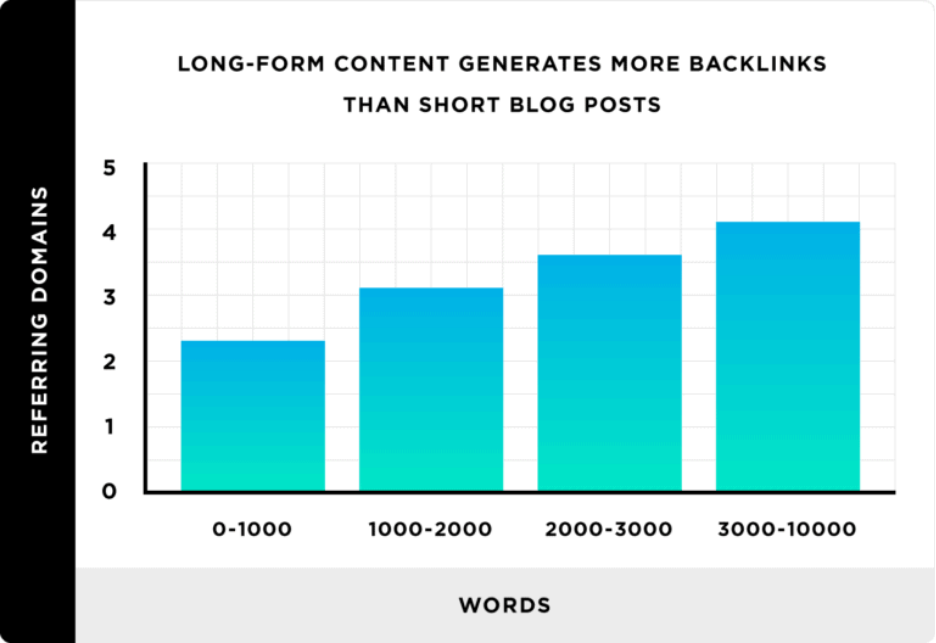
In fact, a recent analysis has found that the top 3 pages contain over 1,400 words on average, and are cited in AI summaries far more often because they have a larger semantic range of choice.
In addition, extensive guides allow you to address the primary and secondary search intent within a single URL. Such breadth of semantics increases topical authority, which increases the chances of being selected as a citation source.
Example format:
- Clear definition
- Why it matters
- Step-by-step process
- Supporting statistics
- FAQ section
The more detailed and structured the guide is, the easier it will be to refer to the AI systems.
2. Original Research and Industry Studies
AI tools always prefer original research since it provides new data. The content is automatically citation-worthy when it is proprietary statistics, survey results, or experimental results. As an illustration, in the instance of a study on the impact of AI citations on organic CTR, such information is referenceable in nature. You are not reusing old knowledge, but contributing to it.
This complies with good AI search optimization, where proprietary information increases the chances of citation. AI tools would prefer to go to the source of statistics instead of secondary commentary.

Search Engine Journal has stated that 93 percent of B2B marketers who utilize original research believe that it is an effective form of engagement, and many of them say it is more effective than generic or AI-generated content. Original research increases your presence on the internet as AI models prefer authoritative and commonly cited pages.
Moreover, research-based pages are likely to be attractive to journalists, analysts, and content creators by nature, and signals of authority increase with time. As the number of citations grows, AI systems view that authority as confirmation.
Example format:
- Research objective
- Methodology
- Key findings (visualized)
- Strategic implications
The more open your methodology, the more trustworthy your research will be to AI systems.
3. Organized Comparison Pages
AI tools often mention comparison content as they simplify the process of making a decision. Comparison tables are easily extractable and machine-readable.
To illustrate the point, AI systems can attract summaries in the form of brief descriptions comparing AI SEO tools through pricing, features, benefits, and examples of how they are used.
In comparison content, when adding AI search optimization, ensure that the page has:
- Breakdowns of features next to each other
- Pros and limitations
- Ideal user scenarios
- Updated data
Comparisons in an orderly manner are particularly effective because they eliminate uncertainty. They also coincide with commercial-intent queries, which are becoming more and more answered in AI summaries directly.
Increasingly, people are seeking evaluative content. The AI systems satisfy that requirement by prioritizing comparison summaries.
4. Step-by-Step Tutorials

Instructional material may be referred to at length because it answers procedural questions directly. The AI software tends to collect numbered steps responding to how-to questions.
As an example, a tutorial on how to add schema markup to enhance the visibility of the AI is designed to be extracted.
In order to optimize AI Search, make sure tutorials:
- Use clear step numbers
- Avoid vague instructions
- Insert diagrams or illustrations
- Give practical results
The more obvious the steps, the more the AI systems will reproduce them correctly.
Moreover, the tutorials ought to foresee typical implementation errors and deal with them in advance. Citation likelihood is high when AI systems are able to identify full procedural coverage.
Example structure:
- Define objective
- Identify tools
- Execute implementation
- Measure impact
Procedural clarity enhances citation probability.
5. Expert Roundups
AI tools will reward content that synthesizes different expert views, as this will reduce bias and reinforce authority signals.
The future of AI-driven search is also the subject of an expert roundup that encompasses the views of SEO strategists and data analysts and introduces credibility layers.
However, effective AI search optimization requires that all professional quotes be cited in a standard and transparent manner. AI will be more likely to quote than generalize commentary.
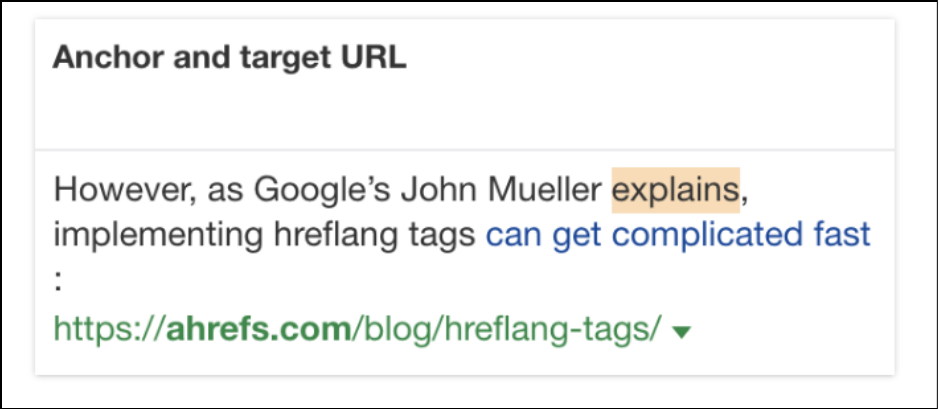
Research reveals that the presence of expert quotes adds credibility to the content, and the search engines may view the expertise with a higher degree of confidence. Roundups enhance AI trust signals because the strength of backlinks is related to citation authority.
Furthermore, the multiplicity of opinions discourages simplification, and that gives power to the context.
Example format:
- Expert name and designation
- Quoted insight
- Contextual explanation
- Strategic takeaway
To conclude, credibility and transparency matter.
6. Definition-Driven Glossaries
Glossary pages are often retrieved by AI tools as they contain concise definitions directly responding to informational questions.
A citation hub can be represented by a glossary of important AI and SEO terms. Each term should include:
- Clear definition
- Contextual example
- Related concept
In creating glossaries that facilitate AI search optimization, do not use vague descriptions. Rather, be specific, give structured explanations.
For instance:
AI Citation: The citation of a web source in the search result of AI.
Sample: An AI synopsis on a study on search behavioral patterns.
Glossaries are particularly effective when linked within themselves to more detailed content pages, which increase the topical authority and solidify semantic connections throughout your site.
7. Measurable Outcomes through Case Studies

AI tools prefer case studies as they present practical outcomes as opposed to theoretical statements.
An example of a case study that provided tangible evidence is the data on how a site boosted AI citations by reorganizing its content.
In order to match case studies to AI search optimization, add:
- Problem statement
- Strategy implemented
- Metrics before and after
- Lessons learned
According to Search Engine Journal, high user engagement indicators, including time on page and level of interaction, are typical features of high-performing content. Due to the comprehensive information presented in case studies, actual data, and illustrative examples, case studies tend to prompt further reading and longer durations of sessions, which correlate with engagement patterns linked to high search visibility.
Storytelling that is data-driven is effective since it confirms methodology and provides a real-life example.
8. FAQ Hubs with Schema
FAQs are very useful because of their short response format. AI tools are also able to extract structured Q&A blocks.
As an example, a properly optimized FAQ answering:
- What is AI search visibility?
- What are the methods of citation selection used by AI tools?
- Why does structure matter?
Enhances extractability.
To enhance AI search optimization, introduce the FAQ schema and make sure that the answers are not too long but authoritative. Keep it simple, avoid filler explanations.
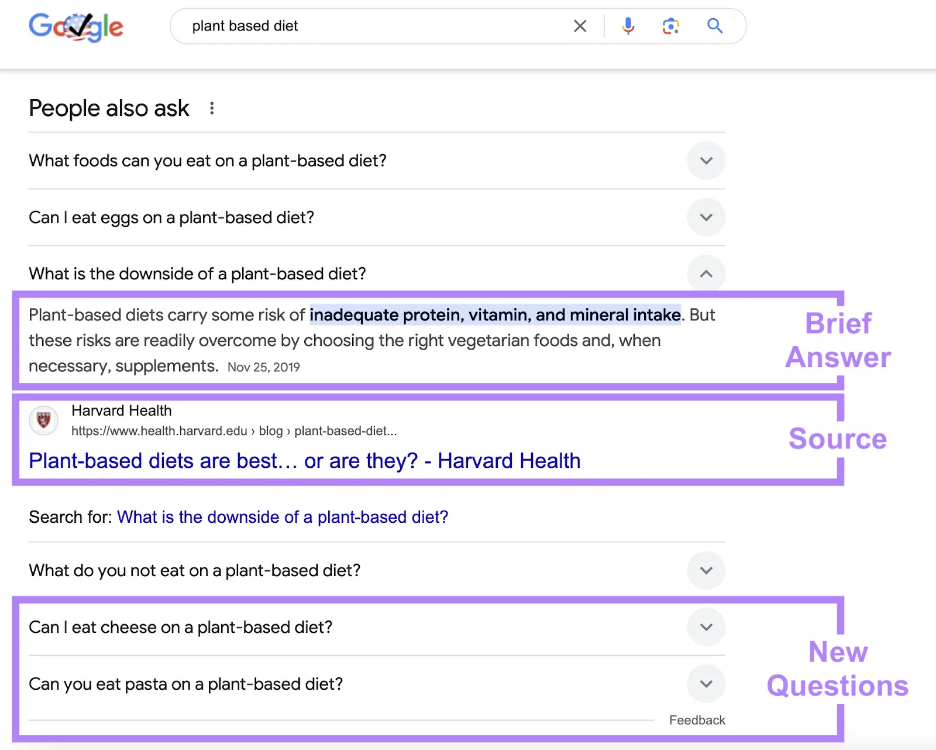
In a study conducted by Semrush on the characteristics of SERP, structured content formats like FAQs raise the chances of a page being eligible to appear in such rich results as Featured Snippets and People Also Ask boxes.
These enhanced search features have a higher likelihood of including pages that explicitly address user inquiries in an organized manner. It is all about being concise and precise.
9. Resource Lists & Curated Directories
AI tools frequently cite curated lists because they consolidate multiple authoritative references in one place.
For example, a list highlighting leading agencies in a specific niche offers immediate comparative value. Pages structured like this, such as curated industry roundups, tend to attract citations because they summarize credible entities in one resource.
Incorporating AI search optimization into curated lists means:
- Vetting inclusion criteria
- Providing structured descriptions
- Keeping the list updated
- Including contextual summaries
Curated directories help AI systems provide trustworthy recommendations without ambiguity. Additionally, list-based content tends to earn higher backlink velocity, reinforcing authority signals over time.
Bringing it All Together: Building for AI Citations Strategically
AI tools are reshaping visibility, and content formats now determine whether your brand gets referenced or overlooked. Data-backed guides, original research, comparison pages, tutorials, roundups, glossaries, case studies, FAQs, and curated lists each serve a strategic purpose.
When structured correctly, these formats increase extraction clarity, authority signals, and citation probability. Integrating AI search optimization across these content types ensures your pages are not only discoverable but also reference-ready.
As AI search experiences continue to evolve, the brands that structure content intentionally will secure sustainable visibility. Citation-driven strategy is no longer optional; it is foundational to long-term organic growth.
Organizations that invest early in citation-friendly architecture will build a durable competitive advantage in AI-dominated search environments.

About the author: Vibhav Gaur, Business Head
Vibhav Gaur leads strategic operations and business growth at the organization. With a strong background in digital transformation and customer-focused solutions, he has helped numerous clients streamline their web presence and scale efficiently. His leadership ensures seamless execution across teams, with a commitment to delivering results and fostering innovation in every project.


