
Google I/O 2025 didn’t just launch new features; it redrew the entire search map.
What we’re witnessing is not an evolution of search but a fundamental rewiring of how information is discovered, filtered, and delivered.
The big takeaway? Search is no longer global-first. It’s context-first.
We’ve officially entered the age of intent-aware, AI-powered discovery, where relevance is calculated not just by what’s on your page but by who’s asking, where they are, what they’ve searched before, and even the time of day. Google’s search engine has become a digital mind-reader with a local compass.
So, what does that mean for SEO?
It means your tried-and-true tactics, keyword stuffing, generic backlinks, and ranking by brute force are stuck in the past that AI has already outgrown. Google no longer just crawls content. It understands it, interprets it, and prioritizes it in real time based on individual user context.
According to recent data from Semrush, the use of AI Overviews is increasing. In March 2025, 13.14% of all queries resulted in an AI Overview. That’s an increase of 6.49% from January 2025.
The new formula for visibility combines AI intuition, local intelligence, and smart linking strategies that actually serve the searcher. If your content doesn’t connect to that trifecta, it’s already slipping out of sight.
Welcome to the new frontier. Let’s unpack how AI Search, Local Context, and Links now form the holy trinity of modern SEO.
New DNA of AI-Driven Search

Post-I/O 2025, Google’s Search Generative Experience (SGE) has evolved far beyond traditional keyword parsing. It’s no longer a reactive tool—it’s an anticipatory engine. Google now understands your intent before you finish typing. It predicts. It adapts. And it curates answers in milliseconds with near-telepathic precision.
At the core of this new search paradigm is context—layered, dynamic, and hyper-personalized. SGE pulls from your location, search history, app usage, device type, and even the time of day to build a real-time snapshot of what you actually want to know.
Looking for “best tacos in Austin”? You’re not just getting a list of restaurants anymore. Google considers your recent searches, local reviews, social signals, neighborhood events, and even traffic data to recommend where to go when to go, and what to order. It might even throw in a local influencer’s TikTok for flavor.
If you’re searching “how to appeal a city fine,” Google’s AI pulls in civic websites, local legal blogs, and government sources specific to your zip code. One query, a universe of tailored insight.
What this means for SEO professionals is crystal clear: the rules have changed. Optimization is no longer about stuffing in keywords or out-ranking competitors. It’s about feeding the AI what it needs to understand, trust, and recommend your content.
The new trifecta for visibility in this AI-first ecosystem?
- Locality – How relevant are you to where the user is?
- Relevance – Does your content match the intent, not just the query?
- Authority – Are you a source worth citing, not just listing?
This is the new DNA of search. If your strategy doesn’t speak context fluently, your content won’t even make it to the conversation.
Local Signals Are Now Priority Data
One of the most disruptive shifts out of Google I/O 2025 is how aggressively Google is leaning into Proximal Relevance—a search framework that prioritizes results based on geographic context, hyperlocal cues, and cultural alignment.
In short, where you are and what matters around you now shape what you see.
Local signals aren’t just influencing results—they’re defining them. Google’s AI doesn’t just know you’re in Brooklyn; it understands that Williamsburg users may value different sources, phrasing, and review formats than someone searching from rural Ohio.
Language, citations, schema, and even tone are now localized to fit user expectations in that moment and setting.
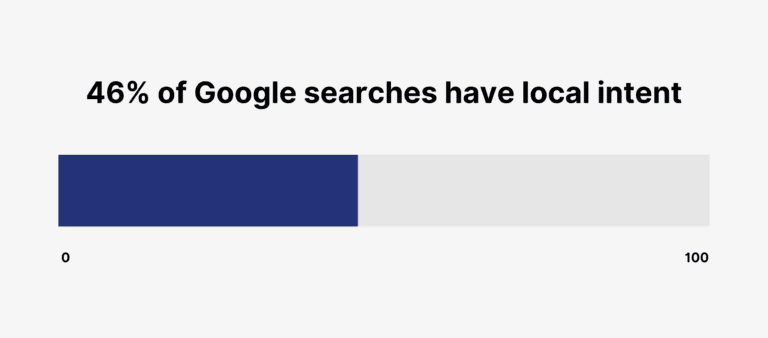
According to Backlinko, 46% of all Google searches have local intent. Take a search like “Affordable coworking spaces near me with 24/7 access.” A year ago, you’d get roundup blogs or Yelp reviews. In 2025, you’ll see AI-curated options sorted by proximity, real-time availability, user preferences, and cross-sourced data from platforms like Google Maps, Calendly integrations, and neighborhood review apps.
Local publications, small business sites, and community-focused blogs are now more influential than ever, not because of domain authority but because of their proximity-based trust factor.
That’s the new game.
Want Your Content to Rank in an AI-first Location-Aware Search World?
- Use location-aware schema and precise business metadata
- Collaborate with regional publications and directories
- Optimize for localized FAQs and intent-based questions (“Do I need an appointment at [location]?”)
- Adapt content to regional dialects, references, and user behavior
Local SEO isn’t just a strategy anymore; it’s your entry ticket to the AI’s shortlist. If your content isn’t geo-tuned and context-smart, it won’t make the cut.
Links Aren’t Dead, But They’ve Changed Jobs
The old mantra of “more links = better rankings” has officially expired.
Post-Google I/O 2025, links haven’t disappeared; they’ve simply evolved. Today, links are no longer treated as vote counters. They’re used as credibility validators within the AI’s decision-making matrix.
SGE doesn’t just crawl backlinks. It interprets them.
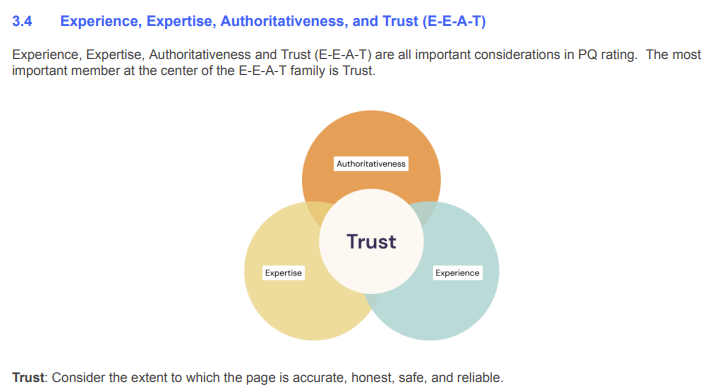
Google’s AI examines the context of each link: Where does it appear? What language surrounds it? Is it connected to a trusted voice or a spammy directory? Is the referring site demonstrating E-E-A-T—Experience, Expertise, Authoritativeness, and Trustworthiness?
The game has moved from volume to value.
Today, three types of links shape your presence in AI-curated snapshots and summaries:
- Topical Links – These are earned through content with subject-matter depth. If you publish industry-leading insight and get linked by other experts, AI sees you as a go-to resource.
- Local Links – Proximity-based mentions from regional news sites, chamber of commerce directories, or local bloggers are now vital. AI favors content that resonates in a user’s geographic context.
- Contextual Links – Placement matters. Links buried in sidebars or footers don’t carry the same weight as those naturally embedded in a meaningful paragraph that aligns with the user’s query.
Here’s the takeaway: AI needs reasons to trust your content, and high-quality links are receipts of trust.
Getting cited by the AI isn’t about having the loudest backlink profile; it’s about having the most relevant and reputable connections. Build partnerships, contribute thought leadership, and earn links that validate why your voice deserves to be in the conversation.
In this new AI-powered era, link equity has become link integrity.
Hyper-Contextual Queries Now Dominate
Google I/O 2025 marks a clear pivot from keyword matching to conversational, context-rich queries. Search is no longer about isolated keywords but about interpreting real-time context that shapes the results for each individual user.

Take the query “best running shoes.”
In the past, this would pull generic lists or reviews. Now, Google’s AI reads far deeper, factoring in where you are, whether you’re near a park or gym, the time of day (morning joggers get different recommendations than evening runners), the device you’re using (mobile users might see quick local pickup options while desktop users get detailed guides), and even what you searched for earlier, like trail running, nudging the AI toward rugged shoe options.
Local events, such as an upcoming marathon, also influence which gear or tips the AI suggests.
This means your SEO content must shift from static, one-size-fits-all pages to dynamic, situation-aware content that truly understands user needs at the moment. It’s less about stuffing keywords and more about answering real-world, context-heavy questions, the kind AI loves to surface.
A Google Trends report revealed that conversational queries are increasing by more than 25 percent year-over-year directly as a consequence of user demand for smarter, more intuitive answers.
If your content can’t speak this language of nuance and relevance, it risks being invisible in the new conversational search landscape.
SGE + Local + Links = Real-Time Discovery
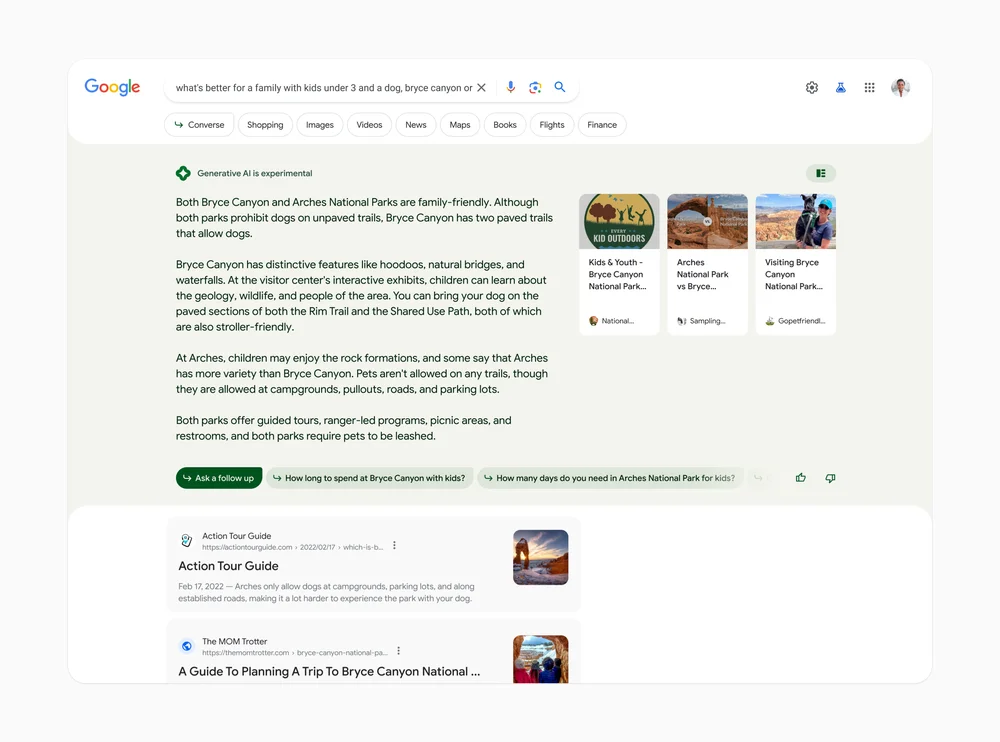
Google’s Search Generative Experience (SGE) has moved beyond being just smart; it’s now situationally aware. The fusion of generative AI, local intelligence, and link-based credibility has birthed something entirely new: search as real-time discovery. And it’s rewriting the SEO playbook in real-time.
SGE doesn’t just answer your query; it understands where you are, what’s around you, and who you’re most likely to trust and then curates content accordingly.
A search for “emergency vet open now” doesn’t serve a static list anymore. Instead, it delivers a dynamic AI-generated snapshot: nearby clinics, up-to-the-minute availability, locally sourced reviews, and whether parking’s available out front, all synthesized into a single response.
So, how do you stay visible in this hyper-personalized, AI-powered search experience? You adapt your content to interact with this new framework, not just be indexed by it.
1. Be Present Where the User Is
Global reach is meaningless if you’re invisible locally.
Whether you’re a national chain or a fast-scaling startup, it’s time to go granular. That means launching city-specific landing pages and local microsites tailored to the community.
Reference local events, regulations, weather, or culture. Use the language your audience uses, not corporate speak, but neighborhood speak. Google’s AI pays attention to this kind of contextual specificity.
2. Structure Content for AI Consumption
AI doesn’t “read” like a human; it processes. The clearer your structure, the more likely your content is to be featured in an SGE snapshot or cited as a reliable source.
Use schema markup to define locations, operating hours, services, reviews, and more. Add hyperlocal FAQs like: “Is there street parking at our Portland branch?” or “Do I need to pre-book for weekend visits in Austin?”
These give the AI hooks to understand not just what your content says but who it’s for and when it matters.
3. Earn Links from Local Experts
Backlinks still matter, but the weight has shifted. AI no longer prioritizes massive domain authority alone; it values trust in context.
A well-placed link from a respected local blogger, university publication, or neighborhood news outlet may now carry more weight than a generic backlink from a big-name aggregator.
- Form partnerships with regional influencers.
- Collaborate with city guides or local chambers of commerce.
- Support nonprofits or events in the communities you serve and get cited for it.
These locally rooted mentions help the AI understand your relevance not just on the web but in the real world.
New SEO Visibility Zones
Forget the classic blue-link stack; Google’s search results are now a mosaic of AI-generated experiences, each a potential entry point for visibility.
At the top: AI Snapshots. These are curated, conversational responses pulled from multiple trusted sources. If you’re cited here, you’re not just ranking; you’re endorsed by the AI.
Next: Local Highlights. These are map-driven panels, interactive carousels, and reviews pulled straight from Google Business profiles and third-party platforms. If your business isn’t optimized locally, you’re out of this conversation entirely.
Then comes Follow-Up Prompts. Google now guides users with “what to ask next,” turning static search into an evolving dialogue. If your content anticipates these queries, you’re in the thread.
Finally, Source Spotlights. This is where Google quietly cites your brand within answers—no link required. You may not get the click, but you get the credit.
The new reality? Search is no longer about one position or one page. It’s about being present in every zone that matters. If you’re not structured, cited, or local-ready, you’re invisible.
Visibility today means showing up, even when users never click.
Case Study: Yelp & The Context Revolution
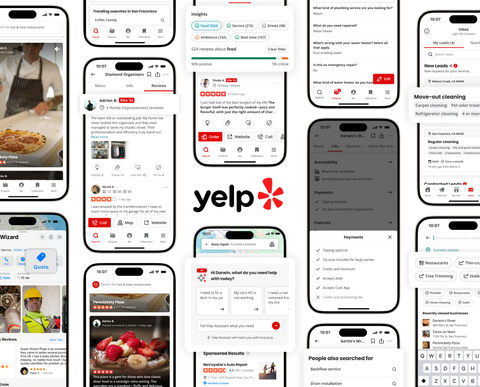
Yelp’s resurgence in the AI-first search era hasn’t come from more reviews—it’s come from strategic, structured thinking.
Instead of chasing blue links, Yelp doubled down on real-time, structured data. By syndicating business hours, menus, and availability through schema markup, Yelp’s listings have become machine-friendly gold. As a result, Google’s SGE frequently cites Yelp in AI snapshots—not just for restaurants but for dentists, mechanics, and dog groomers.
But Yelp didn’t stop there.
They’ve started publishing hyperlocal content built specifically for AI. Think “Best Vegan Spots in Silver Lake,” written not just for people but for generative models to quote inside “Explore Nearby” and follow-up prompts. These location-aware insights help Yelp own local intent without relying on users to click through.
The real lesson? Yelp stopped optimizing for the old search engine and started optimizing for the search experience—one that now speaks in context, not just keywords.
For modern brands, this is the blueprint: build content that lives inside the AI layer, not just underneath it. Because in 2025, being cited in an answer is worth more than being listed in a result.
From Rankings to Relevance: Mastering Search in 2025
You’re not optimizing for algorithms anymore—you’re crafting experiences for an AI that thinks, filters and recommends like a local guide with global reach.
In this new era of search, your content isn’t just competing—it’s conversing. To stay visible, you must become part of the AI’s trusted network: hyper-relevant, locally rooted, and context-aware.
Forget chasing rankings; start earning presence. Because in 2025, showing up isn’t about being the loudest voice—it’s about being the most meaningful at the moment that matters.
So ask yourself: are you just searchable, or are you discoverable in real-time? The difference is everything.
Adapt now, or risk becoming invisible in the AI-shaped future of search.

About the author: Vibhav Gaur, Business Head
Vibhav Gaur leads strategic operations and business growth at the organization. With a strong background in digital transformation and customer-focused solutions, he has helped numerous clients streamline their web presence and scale efficiently. His leadership ensures seamless execution across teams, with a commitment to delivering results and fostering innovation in every project.


