
Back in the day, SEO was a numbers game; sprinkled in the right keywords, snagged a few backlinks, and voila, traffic flowed like clockwork. It was a world where technical tricks trumped storytelling, and optimization outshined originality.
But that dusty old playbook?
Google has already thrown it into the archives. In 2025, AI isn’t just crawling your content; it’s understanding it. With powerhouse upgrades such as SGE and Gemini, the algorithm now reads like a critic, not a collector.
Consider this: A study states that over 60% of searches in 2024 were zero-click; that means what a user sought was available directly in AI-powered search results without ever clicking or visiting a website. And with the SGE rolled out by Google in more than 120 countries, this shift is only gaining momentum.
Context is king, and intent wears the crown. Search has moved from a cold transaction to a warm conversation. It is no longer rewarding content that merely ticks boxes; it favors pages that know its user, speak their language, and address their predicaments with purpose.
Today, Google no longer wants better SEO tricks; it wants better answers. To brands, marketers, and creators, this implies an all-inclusive mindset pivot. Your strategy should extend beyond ranking hacks into the realm of trust-building, subject expertise, and semantic clarity.
Value is not merely observed in this AI-first world; it is experienced. So, if you’re still optimizing as it’s 2015, here’s your wake-up call: Google has evolved, and now, it is your turn.
AI as a Search Co-Pilot: From Links to Answers
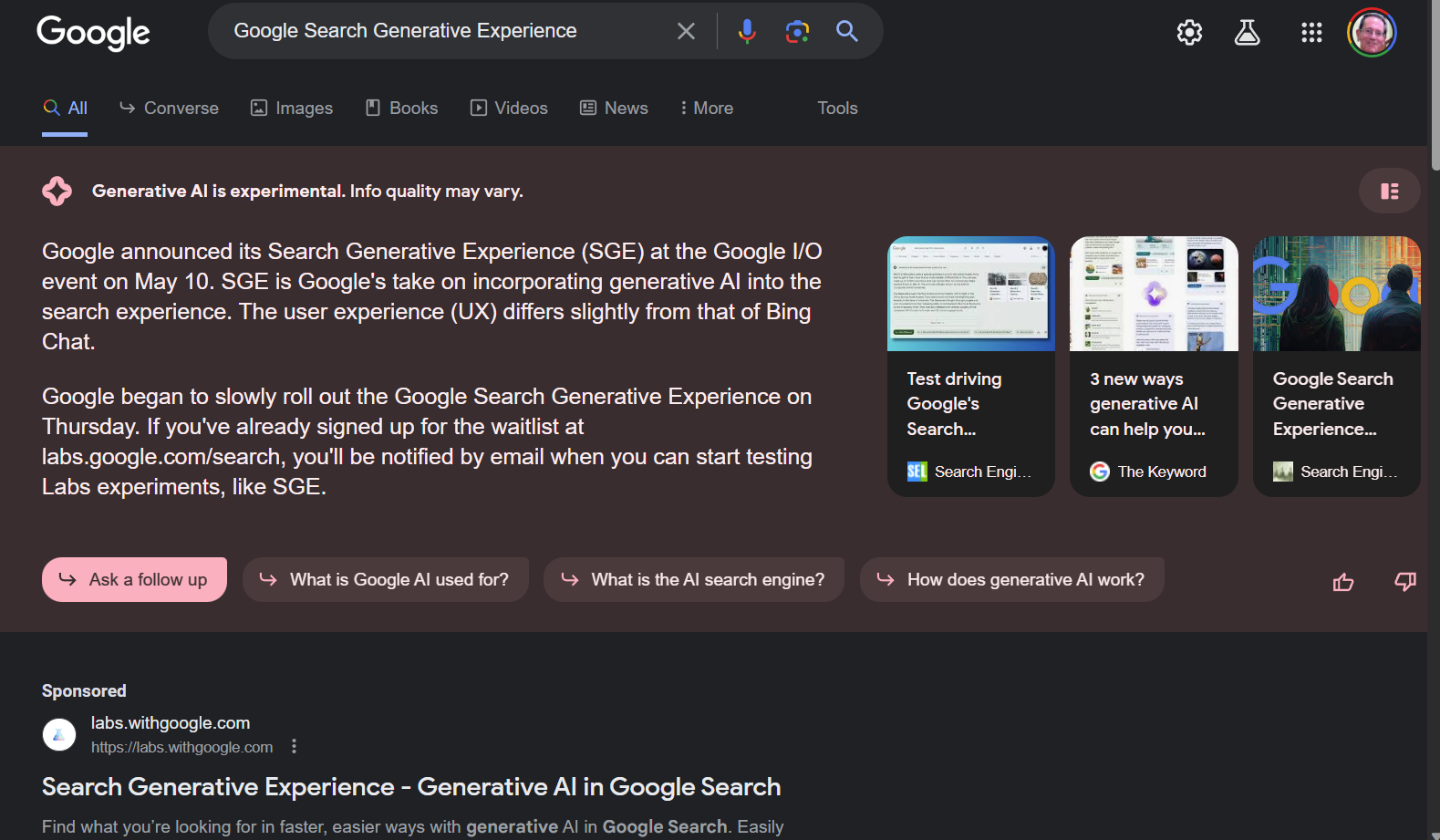
Search has moved past clicks; it is what you see immediately. With the increasing popularity of AI-powered overviews, including Google Search Generative Experience (SGE), the way users interact with search engines is changing drastically.
Where once they could see a list of blue links, users are now being shown summarized, conversational answers at the top of the page.
Zero-Click Results Are the New Norm
A SparkToro survey found that 58.5 percent in the United States and 59.7 percent in Europe searches ended in no clicks. The reason behind this click loss is the use of features like AI Overviews and featured snippets that offer a direct result, fact, definition, and summary that would be available on the search results page itself.
This trend is not going to slow down as SGE aggregates information into AI-generated snapshots. To publishers and marketers, it also means having fewer opportunities for organic traffic, especially for simple, fact-based queries.
Conversational Queries, Smarter Responses
There is also an evolution in the way users search.
They no longer type in keywords such as the “best protein to gain muscles” but instead pose questions such as, “What is the best type of protein to gain muscles after a workout? Such conversational queries are interpreted by AI to provide multi-step, nuanced responses.
This trend is altering the way SERPs are structured. We do not see traditional links anymore; instead, we see more AI-curated insights, frequently asked questions, and product cards, all on the results page. As an example, Google’s SGE can answer a three-part question in one block, which means one does not have to scroll or dig deeper to find the answer.
It is a shift that is being adopted: 82 percent of the respondents said they preferred AI-based search to traditional SERPs as they found them more effective.
What It Means for Your Strategy
Content creators need to pivot and focus on clarity, expertise, and structured data to feed AI systems with the right signals. It is no longer a ranking game, but rather, it is being considered a source that AI trusts to summarize.
The Age of Smart Search Has Arrived
SEO is no longer a technical trick. Google AI is changing by becoming less of a rule follower and more of an insightful reader who values depth, nuance, and human insight. In 2025, your content is not only ranked but also read, interpreted, and evaluated for credibility.
E-E-A-T Isn’t Just a Guideline—It’s the Standard
Experience. Expertise. Authoritativeness. Trustworthiness. These are no longer abstract concepts; they are actual metrics that can now directly influence how Google’s AI ranks your content.
The question is not what you publish but who is behind it, why they’re qualified, and whether they have lived what they write. AI takes these human factors into consideration and gives an advantage to the work that is supported by practical knowledge and authorship transparency.

Shallow content or unreliable information will not cut it. And the interest is undeniable: search volume for “E-E-A-T” has increased by 344 percent in the past five years, unequivocally showing that all brands, marketers, and publishers take notice.
Content with a Face, Not Just a Voice
Google’s AI no longer simply finds relevance, but it reads between the lines. A blog post without any authorship does not win against an article that is written in an authoritative voice. The new currency of SEO is qualifications, references, and personal experience.
AI prefers transparency. Who wrote this? Are they legit? Is the content original or regurgitated fluff? Proactive responses or answers to such questions will help brands to be visible on AI-curated surfaces like SGE, featured snippets, and knowledge panels.
Trust is the New Top Ranking Factor
Credibility comes first and clicks second. The future of ranking is trust building. What you say is not important but who you are when you say it. Only genuine, transparent, and expert-led content can prevail in this AI-driven ecosystem.
Google has evolved. Now it’s your move.
Semantic SEO Is No Longer Optional

The Google algorithm once was a detective pursuing keywords. Now, it is more of a linguist, well versed in nuance, intent, and context.
With AI upgrades like Gemini and SGE, Google doesn’t just look at words; it understands what they mean and how they relate. This has reversed the old SEO script. Semantic SEO is no longer a bonus but rather a standard.
Content That Connects

Writing content is beyond stuffing match phrases. It’s about creating a web of meaning that Google’s AI can interpret like a human.
What currently ranks is based on entities, relationships, and contextual relevance. When you visit a page about “apple”, you should instantly know whether it is talking about the fruit, the tech giant or even the color of your new iPhone case.

Topic clusters, internal linking strategies, and intent-driven writing help the algorithm see the bigger picture, not just isolated terms. Semantics enables your content to capture wider themes and be identified as an expert across multiple related queries.
Your Technical Toolkit

Semantic SEO isn’t just philosophical; it’s practical. Schema markup helps Google interpret structure and purpose, while topic clusters build authority through thematic depth.
The pages formulated in natural language and structured information are more likely to land featured snippets, AI-generated answers, and top positions in Search Generative Experience (SGE) algorithms.
Google no longer ranks mechanics; it ranks meaning. Unless your content adheres to this change, it will end up in digital oblivion, regardless of how well-optimized your headlines once were.
Depth Is The New Dominance
There was a time when shortcuts worked. A 500-word blog with properly placed keywords used to win first place. However, Google AI in 2025 has stepped up.
Now, it’s not just scanning for relevance; it’s analyzing depth, structure, and completeness. A superficial content that just scratches the surface will not withstand the algorithmic plunge.
Search has evolved into a conversation, and thin content doesn’t hold up under AI’s scrutiny.
Long-Form Wins When It’s Done Right

Comprehensive content isn’t just longer; it’s richer. Posts that unpack a topic thoroughly answer multiple related questions and guide users through a logical journey outperform shallow write-ups.
In fact, over 3,000 word posts are 2.5x more likely to rank in the top positions, particularly with effective internal linking and semantics clarity. However, it is not just about word count.
Rambling text that is unstructured or overwhelms the reader won’t cut it either. Clarity, pacing, and purposeful formatting make all the difference.
Experience Meets Design
Great content answers questions. Exceptional content ensures a seamless experience. Google’s AI is now rewarding pages that balance depth with usability, such as easy-to-read headlines, scannable sections, visual aids, and responsive design.
The more satisfied the user is with the experience, the more confident AI becomes in recommending your page.
Content That Earns Its Place
Quantity alone can’t win. You need to earn your place in this AI-first world with value, structure, and purpose. It must reflect true topical mastery, not just for the algorithm’s sake but because your audience expects nothing less.
AI Can Spot AI: Why Human Value Still Wins
In the past, AI-generated content could go under the radar. However, this is no longer the case. Following Google I/O 2025, it’s clear: Google’s AI can now recognize, analyze, and down-rank content that lacks originality, depth, or human intent.
It not only reads what is written, it senses why it is being created and how it benefits the user. Churning out bland, robotic paragraphs won’t earn you a ranking. Google algorithms are seeking something more: human value.
Intent Over Imitation

Human-generated content is always better than AI-developed ones. A recent study by NP Digital has revealed that human-created content produced 5.44 times more traffic compared to AI-generated pieces. That difference says a lot.
There is intent at the core of this difference in performance. The recent AI updates to Google are designed to look beyond relevance but also to assess intent, sincerity, and editorial integrity. Content that reflects lived experience, genuine insight, and human nuance rises above the noise.
Effort shows. So does knowledge. Properly researched pages, well-constructed, and presented in a considerate style make a difference in a sea of generic, algorithm-churned posts. AI tools can definitely help with the process, yet they are not the final draft.
Content left untouched by human hands often lacks the clarity, empathy, and originality that today’s search algorithms reward.
Blend Machines With Meaning
Winning content in 2025 is created by humans, supported by machines, not the other way around. The formula for success is clear: let AI do the heavy lifting, then inject personality, experience, and story. Edit. Add nuance.
Make it feel real, not just readable. Google rewards content that feels alive, empathetic, clear, and intentional baked into every line.
What Truly Ranks Now
Human value is not outdated but is necessary. AI is capable of distinguishing between a useful response and a hollow one. In a world where bots generate at scale, it is the human touch that gets trust and top position.
Voice & Multimodal Search Are Gaining Ground
Fewer people are typing out stiff keyword strings. Instead, they’re asking questions out loud, snapping photos, and using video to explore what they’re curious about.
Google’s 2025 AI upgrades have made voice and visual search smoother, smarter, and more intuitive than ever. Now, a search feels more like a conversation or even a tap on the shoulder with a photo.
Multimodal inputs are no longer emerging; they’re everywhere.
One Query, Many Formats
Typing “best running shoes” feels like yesterday’s search behavior. Today’s users ask, “What’s the best running shoe for flat feet in rainy weather?” often out loud to a voice assistant or alongside a quick photo of their current pair. This evolution isn’t a trend; it’s a transformation.
In fact, 71% of consumers now prefer using voice search over typing. That means your content has to show up not just on a screen but in conversation.
Google’s AI is ready for this. It interprets spoken language, understands visual cues, and blends formats to return answers that feel personalized. Static content no longer cuts it.
Prepare for an AI-First Search World
Search is no longer a one-dimensional game of keywords and backlinks. It’s a dynamic, multi-format, intent-driven ecosystem powered by AI that listens, watches, and evaluates like a human. The rules have changed, and so has the scoreboard.
Content must now do more than rank. It has to resonate. Google’s 2025 upgrades demand a smarter structure, deeper expertise, clearer intent, and more human depth. Voice and visual search are gaining ground. Zero-click results are the norm. Pages that reflect E-E-A-T, semantic clarity, and emotional intelligence will dominate.
For brands and creators, this isn’t a warning; it’s a window. The most prepared players will be the ones who stop chasing the algorithm and start partnering with it. Adaptability will keep you relevant. Authenticity will keep you trusted. Together, they’re your sharpest tools in the AI-SEO era.
Now’s the time to act: Audit your SEO strategy. Identify what’s outdated, what’s underperforming, and what’s missing that human spark. Then, rebuild with AI in mind but with the heart at the center.
Because in this new world of search, the brands that feel the most real will be the ones that rise.

About the author: Vibhav Gaur, Business Head
Vibhav Gaur leads strategic operations and business growth at the organization. With a strong background in digital transformation and customer-focused solutions, he has helped numerous clients streamline their web presence and scale efficiently. His leadership ensures seamless execution across teams, with a commitment to delivering results and fostering innovation in every project.


