

The effectiveness of websites depends on solid backlinks because, without them, your domain becomes invisible to users and search engines. Backlinks aren’t just ways to acquire links; they are digital votes of confidence, signaling to search engines that your site deserves attention and credibility.
However, these links are not attained by spamming forums or leaving links everywhere —it’s a strategic game of authority, relevance, and quality. Link-building services come in handy in this case as they promise ranking, organic traffic, and strengthening of your online presence.
But is it a smart investment or another SEO gamble?
With Google cracking down on low-quality links and black hat tactics, selecting the right approach is critical. If played your cards right, link-building can become your rocket to online supremacy. Make mistakes, and you risk getting lost in search engine obscurity.
So, is outsourcing your link-building strategy really worth it?
Let’s find out.
Understanding Link-Building Services

wikiweb.com
Link-building services are the architects of your website’s authority and visibility. The services concentrate on acquiring high-quality backlinks from reliable sources in order to boost your site’s trustworthiness in search engine results.
To improve your search engine results and organic traffic, link-building services use strategic outreach and leverage existing relationships.
In fact, 67.5% of SEO experts say backlinks have a major impact on search engine rankings, with the top page on Google receiving, on average, 3.8 times more backlinks than pages ranking 1 to 10.
Crafting Connections: The Art of Link-Building Strategies
Building effective links is a blend of creativity and strategy, using diverse approaches to secure valuable links.
- Guest Posting: This entails publishing insightful content on other websites in your niche and embedding links back to your site. Since it’s a symbiotic relationship, host sites get quality content in exchange for authoritative backlinks. In fact, 64.9% of link builders cited guest posting as their primary strategy.
- Niche Edits: This tactic, often called “curated links,” entails including your link in the information already on the relevant websites. By including your link within pages already indexed, you can swiftly take advantage of the SEO value of established content. You must build rapport with webmasters using this strategy and provide them with a value that is relevant to their already-existing content.
- Digital PR: It is comprised of producing newsworthy content or articles that naturally generate backlinks. Create captivating articles or data-driven reports that will capture the interest of influencers and journalists in order to obtain backlinks from respectable publications. In addition to enhancing SEO, digital PR increases your website visibility and reputation.
 semrush.com/blog
The Ethical Spectrum: White-Hat vs. Black-Hat Techniques
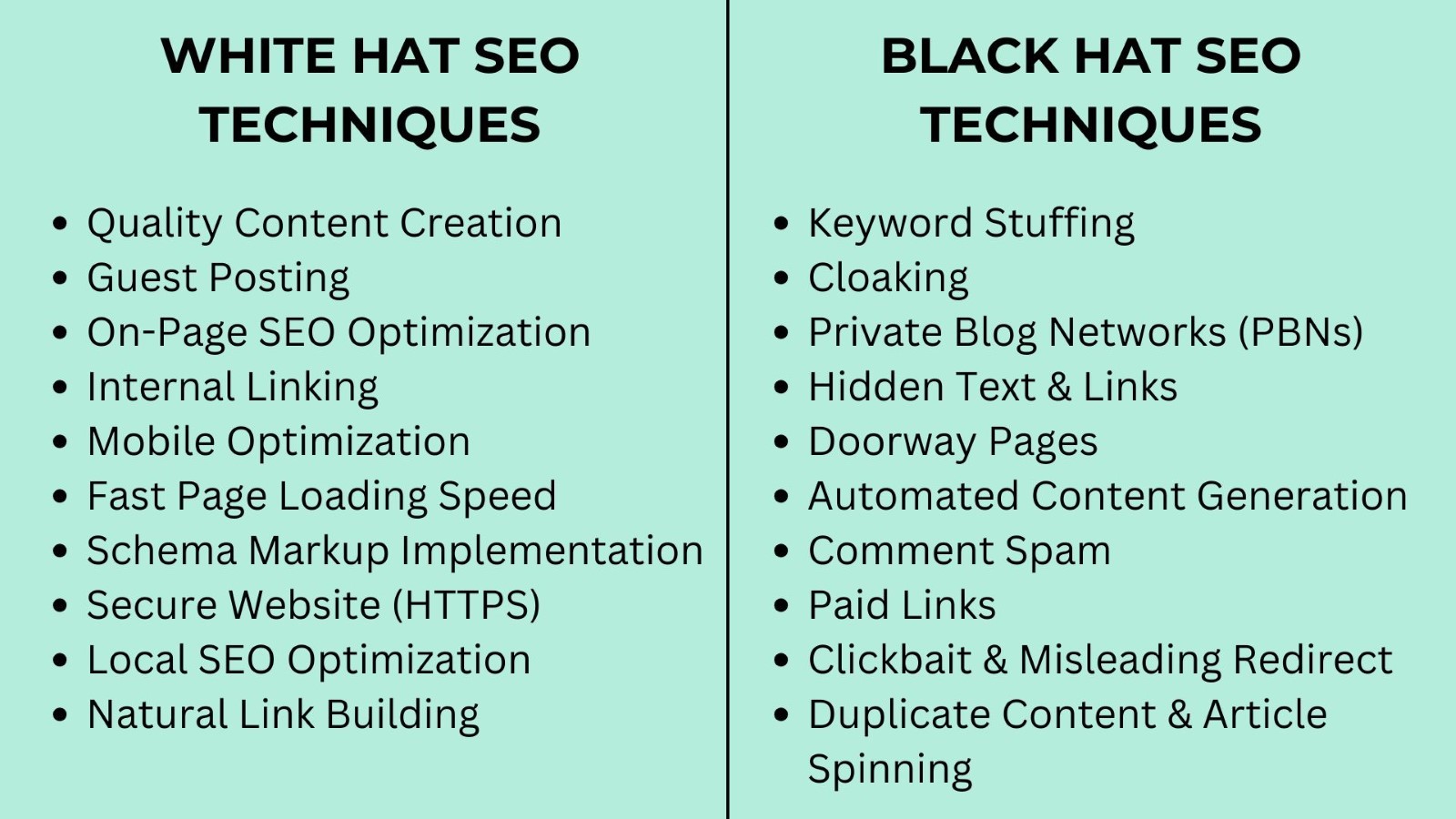
The methods used in SEO can be divided into:
- White-Hat Techniques: These ethical strategies align with search engine guidelines. It all comes down to providing consumers with value, creating excellent content, and generating links organically. To further reduce the likelihood of search engine penalties, white-hat link-building places an emphasis on sustainability and long-term success.
- Black-Hat Techniques: This technique uses manipulative methods, including link buying, link farms, and hidden text that are beyond what search engines consider reasonable. As appealing as they sound for short-term gains, black hat techniques carry huge risks, including severe search engine penalties that can instantly impact your website’s visibility.
The Benefits of Investing in Link-Building Services
Link-building services are the driving forces behind your website’s increased visibility and authority in digital marketing. These services aid in obtaining high-quality backlinks from reliable sources, which increases your website’s perceived legitimacy in search engine rankings and yields numerous advantages.
1. Climbing the Ranks: Elevating Search Engine Position and Domain Authority
Backlinks are the digital world’s trust signals—every high-quality link is essentially a validation that signals search engines that your content is valuable, relevant, and worth ranking.
Example: Suppose you’re running a fitness blog, and one major health publication like Men’s Health or Shape Magazine links to your article on strength training.
That one link doesn’t just bring direct traffic; it tells Google you’re trustworthy, increasing your content’s visibility in search results. Over time, your domain authority increases, which in turn maximizes the chance of your site ranking for competitive fitness-related keywords.
2. Driving the Surge: Boosting Organic Traffic and Brand Visibility
A robust backlink strategy doesn’t only increase your rankings—it also brings in organic traffic to your site. Pages ranking at the top naturally get 5% to 14% more follow links each month, thus improving visibility and authority.
Example: Suppose you own an eco-friendly fashion brand, and a top sustainability influencer posts your website on their blog about ethical shopping. Their audience, already passionate about sustainable living, is likely to trust their recommendation and explore your brand.
Hence, this backlink, on top of pushing you higher up in the search engine ranking, also brings a large wave of engaged, like-minded consumers from the influencer’s audience. With the right placements, link-building becomes a never-ending traffic-generating machine.
3. Efficiency Unleashed: Saving Time and Resources for Businesses
A high-quality backlink network requires persistence, hard effort, and patience. Internal teams can better utilize their resources and concentrate on their core responsibilities through outsourcing.
Consider a rapidly expanding SaaS startup that is attempting to expand. The marketing team is already overburdened with overseeing user interaction, content production, and product releases.
Instead of wasting months trying to obtain backlinks, they spend money on a link-building company that places them on reputable tech blogs and review websites. Not only does it boost their SEO, but it also frees up the team to refine their core messaging and user experience constantly.
4. Tapping into Expertise: Accessing Industry Knowledge and Established Networks
Link-building agencies bring to the table a wealth of industry knowledge and established relationships. With their experience, they can identify the most promising linking opportunities and methods that follow the latest SEO best practices.
For example, a travel agency specializing in luxury vacations teams up with a link-building service that has connections with top travel bloggers and online magazines.
Instead of randomly requesting backlinks from websites, they are featured in a roundup of the “Top 10 Luxury Destinations” on a website with millions of monthly visitors. This exposure not only boosts their domain authority but also attracts high-traffic, high-intent travelers keen on premium experiences.
The Potential Risks and Challenges
While link-building can be a valuable process, it has its drawbacks. One poorly thought-out move can do more damage than good through penalties, wasted capital, and credibility loss. Knowing the traps is the first step to building a solid foundation.
Now is the time to examine the risks and challenges to be aware of and how to navigate these smartly.
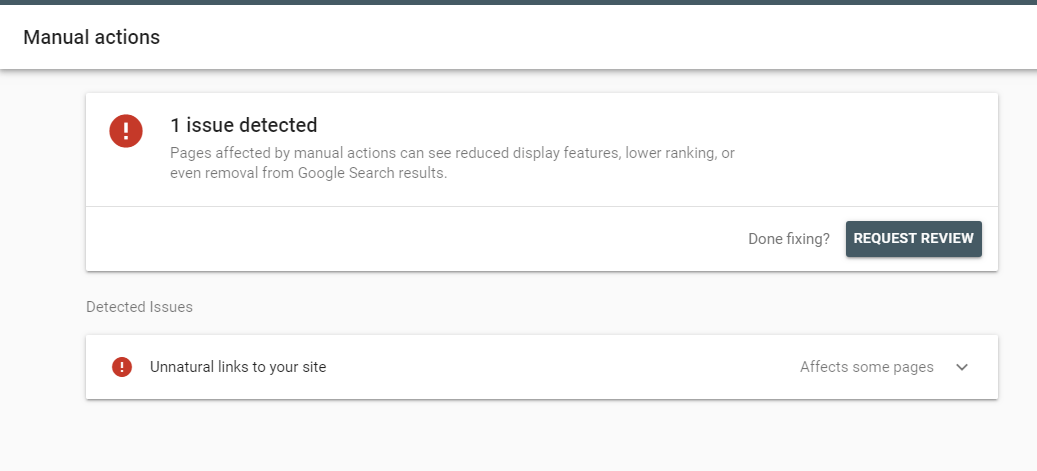
1. Low-Quality or Spammy Backlinks Can Lead to Penalties
 ahrefs.com/blog
Not all backlinks are beneficial. Google’s algorithms prefer high-quality, related links from authoritative sources. Spammy, irrelevant, or paid link schemes can result in severe penalties.
One such example is the well-known UK flower delivery service Interflora. Google penalized Interflora in 2013 for using a paid link scheme.
Prior to Valentine’s Day, the company used newspapers to place ads with links that improved its search engine ranks. The links did not include a no-follow tag, which is against Google rules. As a result, Interflora lost a lot of visibility and sales when its website was taken out of Google’s search results.
Google also penalized the publications in question, lowering their PageRank from 6 to 0 or 8 to 4 as part of a “shock and awe” strategy to discourage similar behavior.
The case emphasized Google’s commitment to ethical search rankings and the risk of using black hat SEO techniques. Such penalties can take months to recover from, causing significant problems for those who primarily rely on organic search traffic.
For this reason, you need to work with agencies specializing in white hat link-building, earning natural, high-quality backlinks from real content partnerships, guest posting, outreach etc.
2. High Costs Without Guaranteed Results
Link-building services are not cheap to invest in. The cost of a high-quality backlink might range from $100 to $1500 or higher, depending on the domain authority and niche. Additionally, some organizations charge $5,000 to $20,000 monthly for a significant link-building operation.
These high costs don’t ensure immediate results. SEO is a long-term game, and it can take between 3 and 6 months to see ranking improvements. If you’re working with a service that puts quantity over quality, you could end up throwing your money down the drain on links that don’t provide any value.
Businesses should look for agencies focusing on relevant sites to deliver high-valued backlinks and provide transparent reports to maximize ROI.
3. Choosing the Wrong Agency or Service Provider
There are too many agencies nowadays in the SEO field that guarantee overnight success. However, most of them employ black-hat methods such as private blog networks (PBNs), link farms, or automated link-building software, which are harmful to your site.
The Hidden Risks of Black Hat SEO: Lessons from BMW and Ricoh’s Google Ban
BMW.de and Ricoh.de were blacklisted by Google in 2006 for using ‘doorway pages’ to artificially increase search rankings. The pages included excessive keyword repetition, and the visitors were forwarded to content that was not indexed by search engines, which was in violation of Google’s quality guidelines. Google does not allow such fraudulent practices that artificially inflate rankings and mislead consumers.
The ban, first revealed by Google engineer Matt Cutts, was short-lived as both companies pulled the offending pages shortly afterward. However, the incident brings to light the risks that fall upon brands when black hat SEO techniques, often unwittingly via outsourced agencies, come into play. Similar tactics have been used by many high-profile companies, including UK retail brands, and sometimes without even knowing it.
Experts recommend that companies be cautious when choosing an SEO company and ensure that the firm practices ethical, content-based techniques and does not use shortcuts such as link schemes or cloaking. Marketers must be informed about SEO best practices and ensure strict contract clauses to avoid unethical practices.
However, the case also brings to light financial risk: companies heavily dependent on organic search can lose tons of revenue if penalized. One travel operator lost £15,000 a day when banned. Ultimately, ethical SEO is the safest strategy to be successful in the long run.
So, before hiring a link-building service, request case studies, references and a breakdown of their approach. Rather than shortcuts, a trustworthy agency will prioritize relationship-based, content-driven link-building.
4. Google’s Evolving Algorithms and Their Impact on Link-Building Strategies
techtarget.com
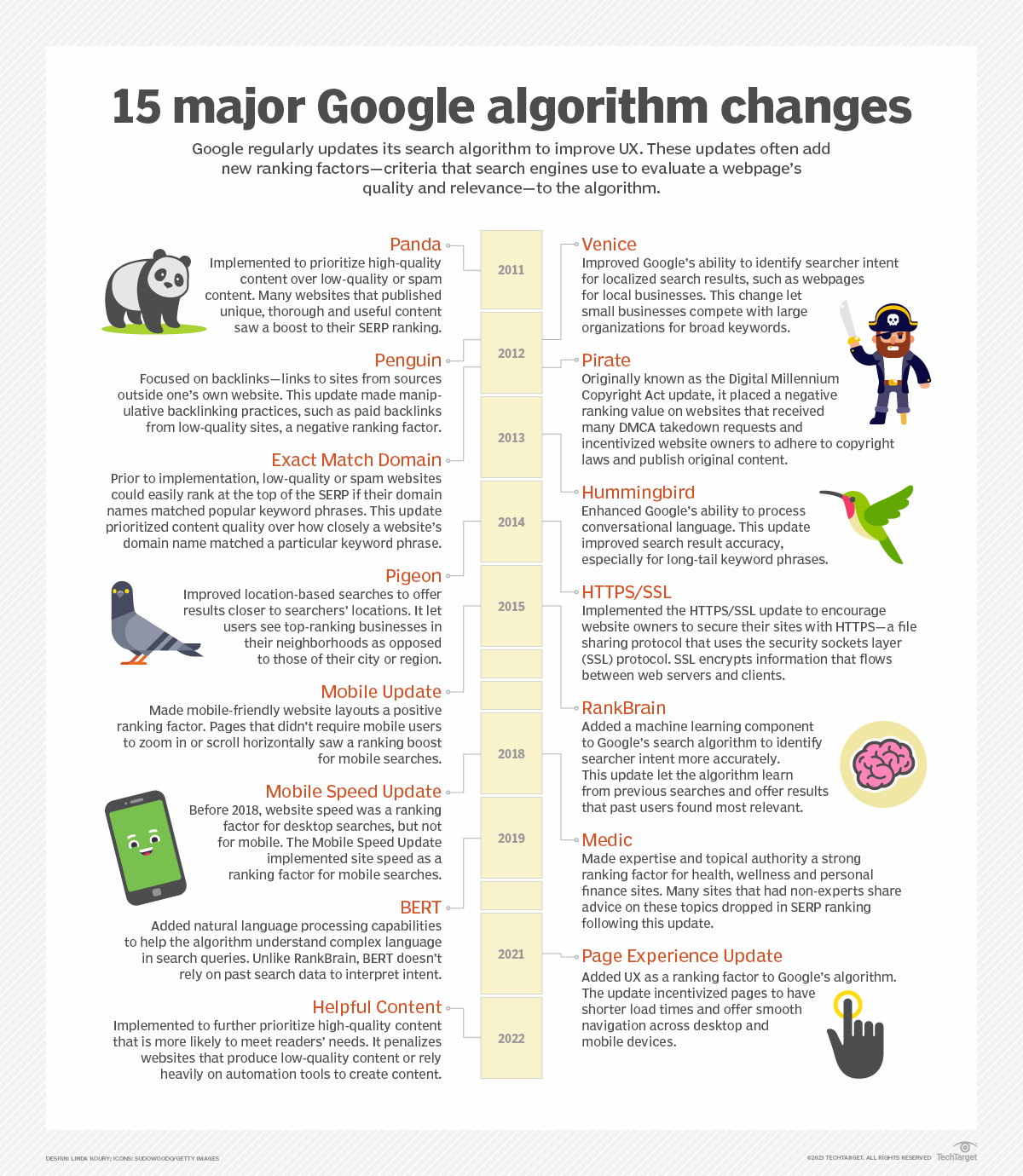
Google keeps updating its algorithm to prevent spammy SEO tactics. Over the past decade, Penguin (2012), BERT (2019), and Helpful Content (2022) have redefined the way link-building should be done.
For example, the Penguin update downgraded manipulative backlinks and penalized unnatural link profiles. Most recently, the Helpful Content update from Google has emphasized focus on content relevance and user experience, so links from low-quality sources can negatively impact rankings and diminish your site’s credibility.
In this respect, it is imperative that you stay ahead of Google’s algorithm changes. If businesses are investing in link-building services, their provider needs to remain on top of ever-evolving best practices, focusing on high-quality content and ethically acquiring links.
How to Choose the Right Link-Building Service
Investing in a link-building service for your website can really help your website’s domain authority and rankings—but only if you pick the right provider. Since 68% of online experiences begin with a search engine, backlinks still rank as one of the most important ranking factors.
However, not all link-building services are created equally, and picking the wrong one could actually backfire.
Here is how to spot the real experts from the risky players.
Key Factors to Look for in a Provider
1. White-Hat Strategies Over Shortcuts
Google’s algorithms have become more sophisticated, rewarding sites with natural, high-quality backlinks rather than artificially created ones. That said, the best link-building agencies focus on white hat practices like:
✔ Guest blogging on reputable sites
✔ Digital PR and outreach to secure mentions
✔ Content-driven link-building (e.g., linkable assets, data studies)
For instance, Ahrefs reports that 96.55% of all web pages never get organic traffic due to no backlinks. A quality provider makes sure your content gets the links it needs to rank without breaking Google’s rules.
2. Niche-Relevant and High-Authority Links
A good agency doesn’t just create any links; it builds the right links. Links from quality, relevant, and authoritative sites in your industry carry a lot more value than random backlinks found on unrelated sites.
For example, let’s say you run a tech website; a link from a high authority site like TechCrunch, Wired, or CNET is worth more than a link from a personal blog you don’t know at all. Always ask providers about their DA (Domain Authority) criteria for link placement.
3. A Transparent, Data-Driven Approach
Clear reporting should be provided by a reliable agency, including:
Source of backlinks, i.e., where your link is placed
Anchor text distribution (to avoid keyword stuffing)
Domain Authority (DA) and traffic volume of linking sites
If a service is unwilling to tell you where the links are being placed, it’s a red flag – they may be using black hat techniques that may harm your site.
Red Flags to Avoid
Not all link-building services comply with the rules. Some use manipulative tactics that render fast results but can result in severe Google penalties.
Here’s what to watch out for:
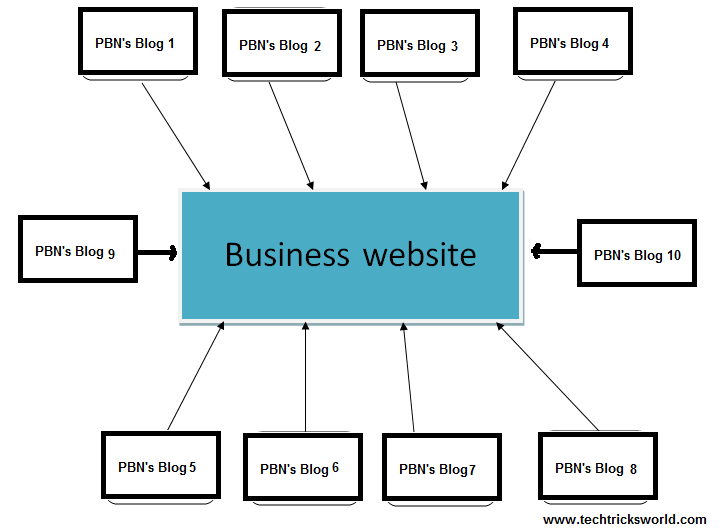
1. PBNs (Private Blog Networks)
 neilpatel.com/blog
PBNs are networks of websites built solely to acquire backlinks. It might be effective at first, but Google has done its best to crack down on them over the years. If your service gives you instant backlinks at several sites, then they’re probably using a PBN.
2. Link Farms and Spammy Directories
A link farm is a network of low-quality websites that link to one another to artificially manipulate rankings. Similarly, spammy web directories offer thousands of backlinks devoid of real authority. If the service promises hundreds of backlinks overnight, you’re probably dealing with a link farm that Google’s algorithm will penalize.
3. “Too-Good-To-Be-True” Promises
If a provider guarantees #1 rankings on Google or thousands of backlinks in a few weeks, be skeptical. Quality link-building takes time—Google prioritizes natural link growth, and rushed, unnatural spikes in backlinks can trigger penalties.
Checking Case Studies, Testimonials, and Transparency
A trustworthy link-building service should have proof of success through case studies, testimonials, and transparent strategies.
1. Case Studies with Real Results
Legitimate providers showcase before-and-after results, demonstrating how their link-building efforts improved search rankings, organic traffic, and domain authority. Look for specific numbers, such as:
A 40% increase in organic traffic within six months
Higher domain authority (DA) growth from credible backlinks
2. Client Testimonials & Reviews
Search for past customers’ reviews on Google Reviews, Trustpilot, and SEO forums. Avoid agencies with a history of complaints regarding penalties or lost rankings.
3. Willingness to Explain Their Methods
Reputable agencies explain their approach to the clients. It’s a clear red flag when a company doesn’t answer questions about how they build links.
DIY Link-Building vs. Outsourcing: Which One Works for You?
Although backlinks are the cornerstone of SEO, is it better to employ professionals or do it yourself?
The decision between outsourcing and do-it-yourself link-building is based on business objectives, time, resources, and experience. Let’s break it down.
When to Build Links In-House (Pros and Cons)
✅ Pros of DIY Link-Building
Full Control – Oversee every step to ensure quality links align with your brand
Lower Direct Costs – No agency fees, just your time and resources
Better Brand Integration – Create link-worthy content tailored to your niche
❌ Cons of DIY Link-Building
Time-Consuming – Researching, pitching, and getting quality links takes months, not weeks
Steep Learning Curve – Requires ongoing SEO expertise to avoid Google penalties
Limited Network – Agencies have publisher relationships; DIYers start from scratch
When Outsourcing Makes Sense for Your Business
✅ Pros of Outsourcing Link-Building
Expertise & Efficiency – Agencies specialize in white-hat strategies and have established connections.
Scalability – Need 50+ backlinks per month? Professionals can handle the volume.
Time Savings – Allow your team time to focus on content and strategy.
For example, brands such as Shopify and HubSpot continue to rank high because of the power of great link-building efforts executed by dedicated SEO teams or agencies.
Cost-Benefit Analysis: DIY vs. Outsourcing
| Factor | DIY | Outsourcing |
| Cost | Lower upfront, higher time cost | Higher upfront, lower time cost |
| Expertise | Requires SEO skills | Handled by professionals |
| Time Required | Significant | Minimal |
| Scalability | Limited | High |
| Risk | Mistakes can harm rankings | Varies by provider |
For example, if your time is worth $50/hour and you dedicate 20 hours a week to link-building, that’s $4,000/month in lost productivity. It might be smarter to hire a $2000/month agency.
Link-Building: A Smart Investment or Not?
If you do link-building strategically, it’s a key to long-term SEO success because it boosts authority, organic traffic, and brand awareness.
That being said, selecting a reputable source matters because not all services are equal. When done correctly, link-building is an investment in your digital development rather than merely an expense.
To make an informed choice, evaluate SEO, industry competition, and your company’s objectives before you dive in. A solid link-building plan may position your brand as an industry leader.
So why not get started today?

About the author: Vibhav Gaur, Business Head
Vibhav Gaur leads strategic operations and business growth at the organization. With a strong background in digital transformation and customer-focused solutions, he has helped numerous clients streamline their web presence and scale efficiently. His leadership ensures seamless execution across teams, with a commitment to delivering results and fostering innovation in every project.


