
What good is an AI writing tool if it writes flawlessly but no one ever finds it?
This is the challenge many developers and founders face. They spend months building platforms that promise sharper copy, faster blog drafts, or data-backed creative suggestions.
Yet, when launched, their innovation risks being buried beneath pages of established competitors. The irony is hard to miss. AI writing tools create content in seconds, but they cannot create digital authority.
Without recognition from trusted, high-authority sites, even the most advanced platform may go unseen by the targeted community it was designed for. This is where the discipline of link building becomes indispensable.
Unlike paid ads that fade when budgets shrink, link building establishes enduring digital footprints. For AI writing platforms, these links do more than influence rankings. They validate credibility in a crowded, skeptical marketplace, ensuring potential users see the tool as trustworthy and relevant.
The urgency is only heightened by industry growth. The global artificial intelligence market was valued at USD 279.22 billion in 2024 and projected to reach USD 1.81 trillion by 2030, growing at a nearly 36% CAGR.
Within this expansion, writing tools represent one of the most competitive niches. In such a rapidly scaling environment, visibility is survival. In this blog, let’s walk through what link building means for AI writing tools and examine how these services work in practice to amplify visibility.
The aim is not just to review agencies but to show how thoughtful link building transforms AI writing tools from hidden gems into recognized industry leaders.
Understanding Link Building in the AI Writing Tools Context

At its simplest, link building is the process of earning backlinks, hyperlinks from other websites pointing to your own. In search engine algorithms, each backlink acts as an external vote of credibility and correlates strongly with rankings. A link from a respected, high-traffic site signals that your platform deserves visibility.
The importance of link building becomes even clearer when applied to AI writing tools. These platforms are generally entering markets where people are skeptical. Some writers, marketers, and businesses want to be assured that the tool they are using isn’t just another trend.
Backlinks from validated publishers, industry blogs, or tech publications prove this. They work toward the same purpose – to rank better in search results and show the world that the AI tool is part of an authority ecosystem.
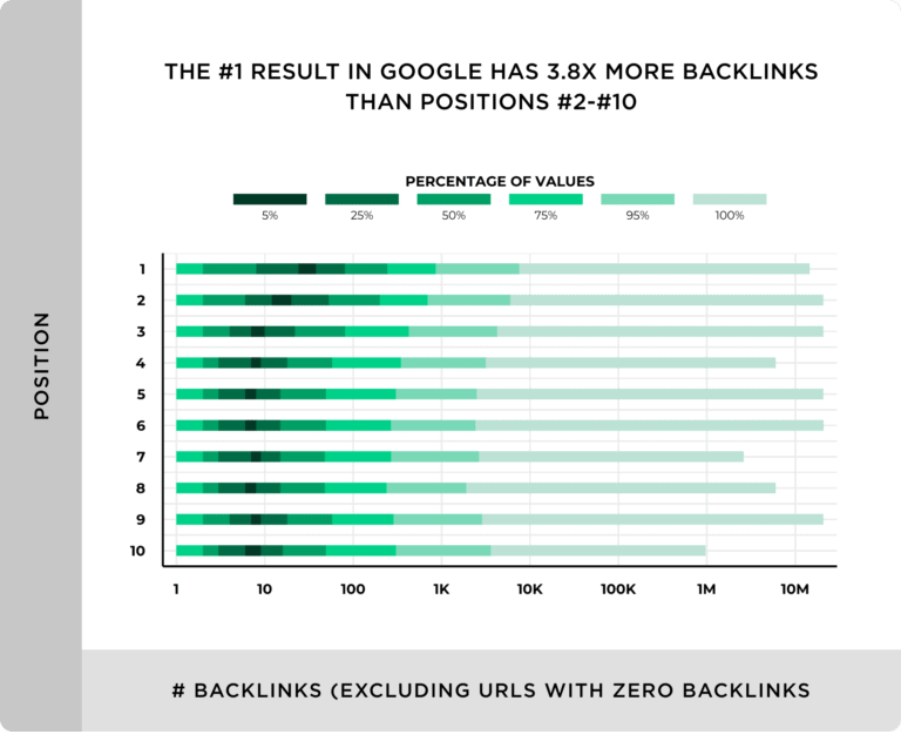
The data confirms the value. The #1 ranking page on Google averages 3.8× more backlinks and 3.2× more referring domains than the next nine results. In contrast, nearly 96% of all web pages have zero backlinks.
For an AI writing tool seeking to stand out, earning quality backlinks is not an option; it’s the deciding factor in whether the product is discovered.
With this foundation in place, the next question emerges: which agencies specialize in crafting the kind of link-building campaigns that can give AI writing platforms their breakthrough moment?
Leading Link Building Services for AI Writing Tools
As the AI writing industry becomes more crowded, finding the right partner to secure high-quality backlinks is no longer optional—it’s a growth necessity. The following agencies stand out for their proven ability to deliver authority, visibility, and trust for brands in this fast-evolving space.
1. Outreach Crayon: Strategic Outreach for Emerging AI Brands

Outreach Crayon has positioned itself as one of the most specialized agencies for SaaS and AI-driven platforms. Their approach is grounded in strategic content placement—not just acquiring links, but ensuring those links appear in industry-relevant contexts.
For AI writing tools, this means being featured on marketing blogs, productivity platforms, and tech publishers where potential users actively look for recommendations.
The agency also emphasizes tailored outreach campaigns. Instead of pursuing high-volume but irrelevant links, Outreach Crayon focuses on editorial-quality placements that signal credibility to search engines and real readers alike.
Given that pages with 40–50 backlinks rank higher than the majority of other content, their strategy aligns well with the competitive needs of AI writing platforms trying to climb SERPs.
2. LinkCrayon: Authority Building with Precision
Link Crayon, known for its focus on scalable link-building solutions, is another leader in this space. Their campaigns are structured to not only boost search rankings but also strengthen a brand’s digital authority.
For AI writing tools—often under scrutiny for originality and trustworthiness—this positioning can be transformative. What distinguishes LinkCrayon is its emphasis on diversified link profiles.

bloggingwizard.com
They combine guest posting, resource link building, and high-domain authority placements, ensuring that the backlinks mimic natural digital endorsement. With studies showing that 66.31% of all pages have no referring domains at all, LinkCrayon’s efforts help AI platforms escape the statistical norm and gain real traction.
3. Siege Media: Content-Led Link Building
Siege Media is widely recognized for its content-first methodology. Instead of viewing link building as a standalone practice, the agency treats high-quality content creation as the natural driver of backlinks.
For AI writing tools, which often revolve around explaining technical value propositions, Siege Media’s model ensures that brand stories are translated into readable, shareable, and linkable resources.
The agency has a proven track record in the SaaS sector, where case studies demonstrate measurable jumps in organic traffic after strategic content outreach. Considering that 93% of online experiences begin with a search engine query, their approach ensures AI platforms are positioned to capture demand from the very first click.
4. Page One Power: Relationship-Driven Link Strategies
Page One Power specializes in manual, relationship-based link building. Their campaigns lean heavily on outreach to authoritative publishers, webmasters, and niche bloggers.
For AI writing tools, this means forging long-term visibility in communities where content creators and marketers gather to exchange insights. The agency’s human-centric approach resonates with platforms trying to counter skepticism around automation.
By earning backlinks in respected editorial ecosystems, Page One Power helps AI tools build not just rankings but also reputation—two goals that increasingly overlap in digital marketing.
5. uSERP: Data-Backed Campaigns for Tech Growth
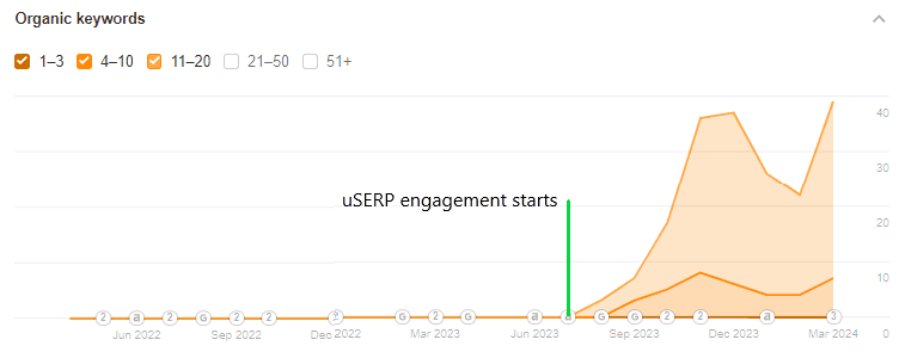
uSERP has carved out a space in the SaaS and technology sectors by delivering data-backed link acquisition campaigns. Their strength lies in connecting brand narratives with measurable outcomes—organic traffic growth, keyword movement, and domain rating improvements.
For AI writing tools that need both credibility and discoverability, uSERP offers campaigns designed around visibility in technology blogs, SaaS directories, and startup publications.
Their case studies highlight how targeted link acquisition results in accelerated rankings. With Google’s ranking factors continuing to assign weight to backlinks as one of the top three signals, uSERP’s data-driven methodology is a strong match for AI brands operating in competitive landscapes.
6. Magfellow
Magfellow provides a strong white-label link-building service, making it a frequent choice for agencies that want to outsource while maintaining branding consistency.
They offer global reach and scalable packages, helping clients expand link-building campaigns without inflating internal costs.
For AI writing tools, this scalability is particularly appealing. A startup could begin with smaller packages and grow into enterprise-level campaigns as adoption increases.
7. We Outreach
We Outreach emphasize authenticity in outreach. Their team avoids templates and instead builds personalized pitches to secure editorial links. Having built over 12,000 backlinks, their process focuses on niche relevance and genuine relationships.
This authenticity aligns perfectly with AI writing tools. In an era when skepticism surrounds AI-generated content, genuine editorial placements offer assurance that the brand is not only discoverable but also endorsed by trusted voices.
Link Building Agencies in Practice for AI Writing Tools
freepik.com
Choosing the right agency isn’t just about outreach capacity—it’s about aligning strategies with the credibility hurdles AI writing platforms face. The following table highlights leading agencies, their approaches, and how these translate into measurable advantages for AI tool adoption, supported by industry statistics.
| Agency | Core Strategy | Application for AI Writing Tools |
| Outreach Crayon | Editorial outreach; research & infographics | Turns complex AI model capabilities into digestible content pieces that earn citations from tech and marketing media. |
| LinkCrayon | AI-assisted prospecting; scalable placement ops | Identifies high-authority domains and accelerates placement in competitive SaaS and AI SERPs. |
| Siege Media | Content-led link earning | Develops data-backed resources and visual reports that attract natural links in tech and SaaS spaces. |
| Page One Power | Relationship-first manual outreach | Focuses on securing contextual links in practitioner and B2B communities, especially SaaS reviewers. |
| uSERP | High-authority editorial features | Targets industry-leading SaaS and technology publishers to boost AI tool credibility. |
| Magfellow | Scalable outreach campaigns | Builds visibility through systematic placements in mid- to high-tier publications, tailored for AI adoption. |
| We Outreach | Personalized outreach to niche sites | Prioritizes human-centric outreach, aligning AI platforms with trusted voices in marketing and tech circles. |
Building Visibility, Building Trust
For AI writing tools, link building is not optional. It is the mechanism by which innovative platforms gain recognition, search visibility, and trust.
- Ethical Links
- Scalable Visibility
These two factors distinguish effective link-building campaigns from ineffective ones. Outreach Crayon gives the narrative-driven outreach to make sense of the AI tools, and Link Crayon provides the AI-powered infrastructure to make placements at scale, establishing more effective links all over the globe.
Other agencies, including uSERP, Magfellow, and We Outreach, add their own flavors to this ecosystem with their unique strengths. When selecting a link-building partner, AI tool creators must not only consider numbers.
Other factors like transparency, editorial alignment, and adherence to Google’s changing E-A-T standards are more important than bulk link counts. With a good agency partner, AI writing tools can become visible; instead of just visible, they can be trusted and accepted across audiences globally.
In the end, the tools may write the words, but link building ensures those words are read.

About the author: Vibhav Gaur, Business Head
Vibhav Gaur leads strategic operations and business growth at the organization. With a strong background in digital transformation and customer-focused solutions, he has helped numerous clients streamline their web presence and scale efficiently. His leadership ensures seamless execution across teams, with a commitment to delivering results and fostering innovation in every project.


