
Google I/O 2025 did not merely hint at the future; it came up with a revolution, and search will never be the same again.
With jaw-dropping upgrades to the Search Generative Experience (SGE) to AI models that can now see, hear, and think in text, video, and voice, the old playbook just got torched.
User behavior is shifting at warp speed, leaving the traditional links far behind. The lowly blue link is being dethroned, replaced by context-rich, machine-generated responses that feel more like conversations than search results.
The battleground has moved as far as brands and SEO professionals are concerned. Visibility isn’t just about rank anymore; it’s about relevance, trust, and whether your content earns a seat at the AI’s response table.
With more than 60% of Gen Z users preferring AI-generated answers to click through websites, it is not a matter of whether you should adapt but how quickly you can pivot. The race has started: will your content be chosen by AI or simply ignored in the noise?
Let’s break down the new rules of survival in Google’s AI-powered world.
Understanding the AI-First Search Experience

46% of Google searches have local intent
Google’s search engine has become more of a conversation partner, one that not only understands what you’re saying but also what you mean. As of 2025 updates, AI has acquired the ability to process queries through a multimodal lens, interpreting not just text but also images, videos, and voice commands.
It’s no longer a game of matching words to websites; it’s about decoding intent in real-time and providing answers that feel tailored and predictive. This shift mirrors a broader trend across industries.
In a recent report by McKinsey & Company, it was shown that 72% of organizations have already adopted AI to at least one business process, highlighting just how profoundly AI is transforming the way we work, search, and engage with digital experiences.
From Keywords to Conversations
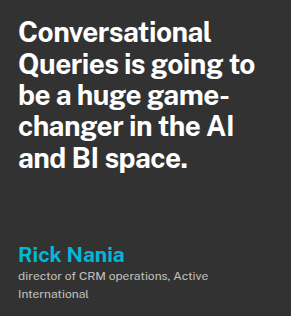
The search has gone conversational. Google’s latest generative AI interprets full-sentence queries, follow-ups, and even vague prompts by pulling from context-rich data points.
Ask something like, “What’s the best digital marketing strategy for a SaaS startup in 2025,” the AI doesn’t just serve up generic blog links; it curates a tailored game plan, factoring in industry trends, budget constraints, and even recent algorithm updates.
A Google Trends report showed that conversational queries are growing at a rate of over 25% year-over-year, a direct result of users expecting smarter, more intuitive results.
The Rise of AI Snapshots & Follow-Ups
Users are no longer clicking through ten links; they read AI-generated summaries that synthesize the best sources in seconds. These “AI snapshots” are positioned at the top of the page and provide a clean and concise answer that often eliminates the need to scroll.
Even more disruptive is the follow-up feature. After answering a question, Google now offers “What to ask next,” inviting users to a continuous dialogue.
Meet the New Visibility Zones
People Also Ask has evolved into “People Also Explore,” integrating AI-generated suggestions with verified insights.
Meanwhile, “Source Highlights” now credits trusted sites in the AI’s answer bubble, a nod to credibility beyond raw ranking. In the AI-first world, ranking is no longer sufficient. You need to be referenced.
The Rise of “Answerless SEO” and What It Means
Search is no longer a gateway; it is turning into a destination. Google’s AI now provides answers within the search panel, leaving little reason for users to click through to websites.
Welcome to the Answerless SEO world, where being ranked number one does not mean you will be paid attention to anymore and being cited is much more important than being ranked.
Keywords Are No Longer King
For years, SEO has been all about keywords, metadata and ranking at the top of search results. However, those rules are being rewritten with the arrival of AI-generated answers. Rather than providing a series of links, Google now synthesizes several sources into one coherent summary, often with no need for a user to dig deeper.
According to a study, 27.2% of U.S. searches in March 2025 resulted in no clicks, compared with 24.4% in March 2024, representing a significant increase in the so-called “zero-click” behavior. It is a definitive indication that the importance of high-ranking keywords is gradually dwindling in this new AI-dominated landscape.
Context, Credibility, and Content Depth Win
AI does not simply skim the surface result; it picks the most contextually relevant and trusted sources. That means thin content optimized to target certain keywords is being sidelined in favor of in-depth, well-structured information backed by expertise and authority.

The web pages exhibiting E-E-A-T (Experience, Expertise, Authoritativeness, Trustworthiness) are much more likely to be featured in the AI summaries, regardless of their traditional SERP position. Concisely, trust becomes the new traffic driver.
Be the Brand That Gets Quoted
In the world of AI-first search, brand presence within summaries is the new visibility metric. You do not have to be the first result; you have to be the source that the AI trusts.
That’s why thought leadership, high-authority backlinks, and content consistency are more critical than ever. When users hear about a brand quoted, cited, or mentioned in an AI response, they will remember it even without ever landing on their website.
Optimizing for AI Snapshots & SGE Boxes
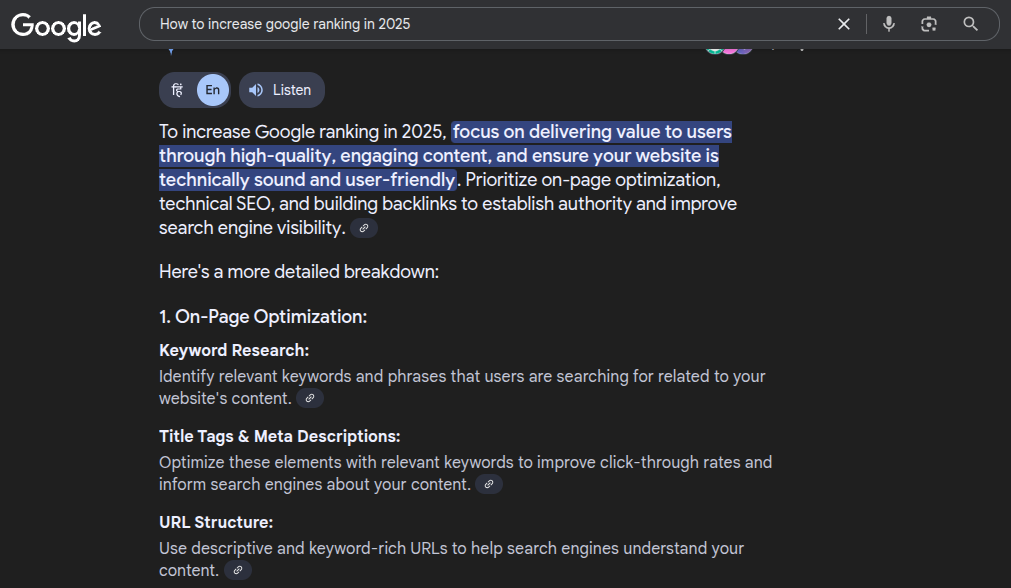
The traditional “blue link” era is giving way to a new search frontier, AI snapshots and SGE (Search Generative Experience) boxes.
When it comes to search results, these AI-generated summaries occupy the top of search results, pulling content directly from reliable sources to provide answers to users instantly. The challenge to brands is obvious: either you are in the box, or you are out of sight.
Make Your Content Snippet-Ready

AI prefers clarity.
In order to secure a place in an AI snapshot, content has to be brief, semantically enhanced, and well-structured. Use short paragraphs, bulleted lists, and clear subheadings.
Consider your content as a discussion with the AI, and unless it can comprehend your structure, it won’t use your words.
Schema and FAQs Are Your Secret Weapons

Structured data has never been so significant.
- Use schema markup—such as HowTo, FAQ, Review, and Product—to give Google’s AI clear context about your page content.
- Add an FAQ section to your page. Well-formulated questions and answers can increase your chances of appearing in zero-click summaries (AI-generated search highlights).
- Clarity beats verbosity in an AI-first world. It’s no longer about saying more—it’s about saying it clearly and accurately enough for machines to interpret and trust.
Topical Authority Beats Keyword Matching
In a world where AI is rewriting the rules of search, visibility alone is no longer sufficient; content must demonstrate clear expertise and authority. While keywords still play a foundational role in indexing, search engines now prioritize depth, accuracy, and topical relevance.
Traditional tactics like keyword-stuffing or manipulating phrasing for rankings have become obsolete. Instead, search algorithms increasingly assess content based on the credibility of its source and the depth of subject matter expertise it conveys.
So, how do you gain confidence from AI-driven algorithms?
It begins with four strong letters, E-E-A-T.
Why E-E-A-T Is the New SEO Currency

It is no secret that Search Quality Rater Guidelines put a lot of emphasis on E-E-A-T (Experience, Expertise, Authoritativeness, and Trustworthiness), and AI systems such as SGE (Search Generative Experience) are following suit.
Keyword stuffing is no longer a winning strategy. Rather, AI prefers content created by individuals who demonstrate subject matter mastery.
Build Dense Content Clusters

Rather than pursuing dozens of individual keywords, the key to winning in AI search is to own a niche. That’s where topical authority comes in. Imagine your site as a knowledge hub with interlinked blog posts, guides, FAQs, and case studies that all revolve around a core subject.
Take digital marketing, for example. Instead of writing individual posts on SEO, PPC, social media and email marketing, create a dense cluster around SEO.
Cover everything from keyword research, technical audits, and link building to local SEO, schema markup, and algorithm updates. This signals to AI systems that your content isn’t surface-level; it’s a deep dive into the subject.
Let’s have a look at a real-world example of Colgate.

One of the best brands where topic clusters can be seen in action is Colgate. While they sell oral care products, their website dives deep when it comes to oral health education. They know their end users are interested in subjects such as dental implants, and thus, they have created a topic cluster entirely around that.
Whether it is a basic topic, such as “What are Dental Implants?” or a more in-depth article, such as “Peri-Implantitis and Protecting Your Dental Implants,” all subtopics connect back to a main pillar page and to one another. It is an ideal example of how strategic content structuring can elevate both user experience and search visibility.
Long-Form Content Signals Mastery
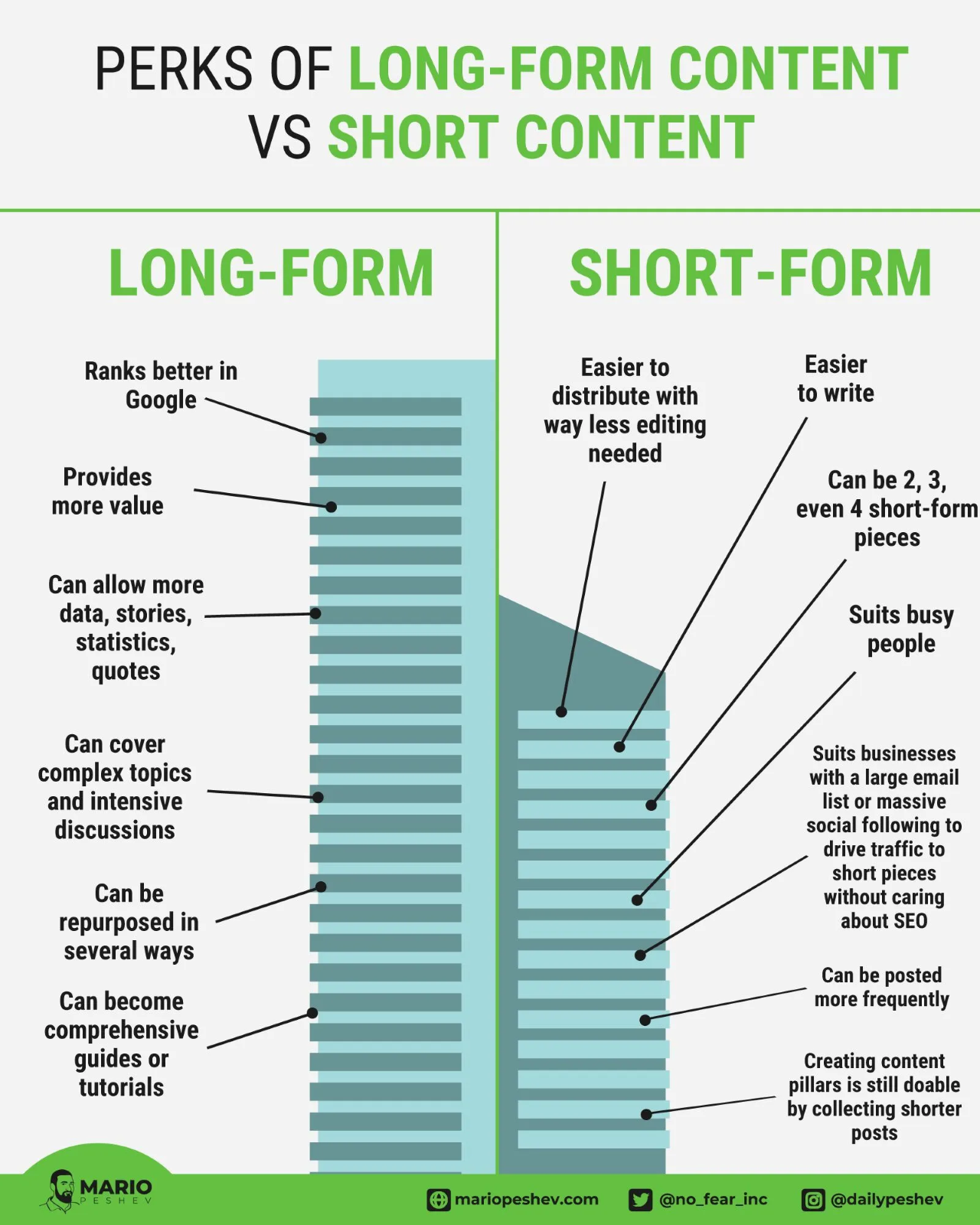
Still thinking short posts can win big in the AI-driven search world?
Think again.
According to a study, bloggers who write ultra-long-form posts (3,000+ words) are 2.5x more likely to report “strong results” compared to those writing 1,500 words or less. In the eyes of AI, depth equals value.
Simply put, AI desires content that understands what it is discussing. While 1,500+ words are often the benchmark for “long-form,” the real key isn’t just word count; it’s structure and substance.
A well-organized guide that answers multiple related questions solves real user problems, and shows deep topical understanding is more likely to appear in both traditional SERPs and AI snapshots.
And in a world where attention is scarce, but search engines crave expertise, that’s your competitive edge.
AI-Driven Content Creation vs. Human Value
In a digital world buzzing with AI-generated everything, a question stands out above the noise: Can the human touch actually be replaced by machines?
AI can write fast, but can it write with feeling, context, or lived experience?
That is where the equilibrium between technology and human insight is required. Google is constantly changing its algorithms and, thus, its perception of AI content. The goal isn’t to eliminate AI from the content equation but to elevate it with human creativity and originality.
How, then, do we blend speed and soul?
Let’s break it down.
Google’s Latest Word on AI Content
At Google I/O 2025, the message to content creators was loud and clear: AI isn’t the villain; low-value content is.
Google made it known that AI-generated content is acceptable, even expected, in today’s digital landscape. But here’s the catch: authenticity, originality, and user value are non-negotiable. The algorithms aren’t judging who or what wrote the content—they’re judging why it was written and how well it serves the user.
To stay in Google’s good graces:
- Ensure content answers real questions, not just SEO checklists.
- Be transparent about using AI; credit the tools you use and highlight any editorial review involved.
- Avoid “AI regurgitation”; repackaging existing content without adding new value is a red flag.
And here’s a key insight: Google is investing more in detecting content patterns that feel robotic, including repetitive phrasing, unnatural tone, or lack of real-world context. So, while AI can draft, it’s the human touch that must be polished.
In a nutshell?
You can let AI into the writer’s room; just don’t let it take over the editor’s desk.
Human Insight is the X-Factor
AI is powerful, but it still can’t replicate human empathy, lived experience, or nuanced expertise. Blending AI assistance with real-world insight is the new gold standard.
According to a report, 66% of marketers say human oversight is essential for using generative AI effectively in their roles. It’s not just about avoiding errors; it’s about adding emotional depth, strategic thinking, and contextual relevance that machines can’t manufacture.
Tools like ChatGPT, Jasper, or Claude can help speed up ideation, outline structures, or generate first drafts, but the real magic happens when you refine that output with your unique voice, thoughtful analysis, and experience-driven insight.
In short, Let AI do the heavy lifting, but let your human instincts do the storytelling. That’s what builds trust, earns rankings, and keeps readers coming back.
Originality and Transparency Prevent Penalties
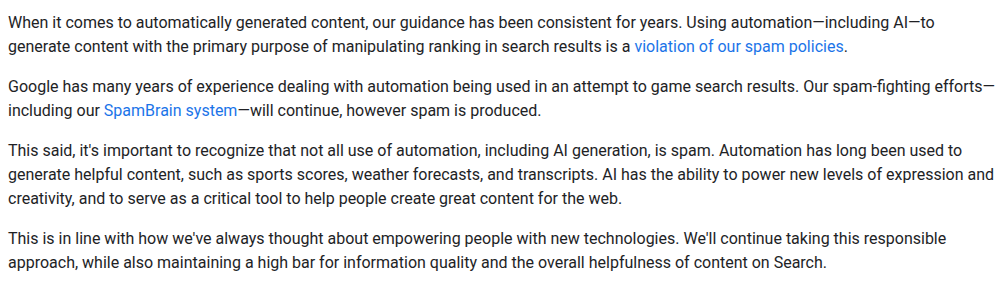
To avoid AI-content penalties, originality is non-negotiable. Don’t regurgitate. Don’t mimic. Create. And be transparent; Google rewards content with clear authorship, cited sources, and editorial oversight.
Future-Proofing Your SEO Strategy
As search evolves, so must your strategy.
The shift from keyword matching to topical authority, depth, and trust isn’t a trend; it’s the new standard. AI-driven search rewards those who consistently deliver value, demonstrate expertise and structure their content to be genuinely helpful.
Future-proofing your SEO means thinking long-term: building trust through quality, optimizing for understanding rather than just rankings, and staying ahead of what algorithms and users truly want.
Now is the time to pause, reflect, and evaluate. Is your current SEO approach ready for the AI-first world?
If not, start by auditing your content, identifying topical gaps, and rebuilding with clarity, consistency, and authority at the core.

About the author: Vibhav Gaur, Business Head
Vibhav Gaur leads strategic operations and business growth at the organization. With a strong background in digital transformation and customer-focused solutions, he has helped numerous clients streamline their web presence and scale efficiently. His leadership ensures seamless execution across teams, with a commitment to delivering results and fostering innovation in every project.


