

Magnific.com
Key Takeaways
- There’s no universal backlink number. The correct number varies by the competitiveness of your keyword, your industry, as well as the appearance of the link profiles of your rivals.
- Referring domains are more important than the number of raw backlinks. Links from many different, relevant, authoritative websites carry more weight than a large volume of links from the same few sources.
- The importance of quality and relevance always wins over quantity. A handful of powerful, topically related links will beat dozens of weak or irrelevant links.
- The acquisition of links should be gradual and not in bulk. An even, gradual rate of addition of links is more secure than peaks.
Backlinks have become one of the essential website success factors in the constantly changing realm of SEO. These useful external links add credibility to your site and contribute significantly to improving its visibility and natural rankings- not all sites are created equal.
In fact, Ahrefs studied over 920 million pages and found that the number of referring domains to a page is the strongest correlating backlink factor with respect to organic ranking. That is precisely why the ones that do manage to establish a strong backlink profile impress search engines such as Google: backlinks are the recommendations of other sites that prove the worth and validity of your content and indicate that it should be recognized and trusted.
However, gaining backlinks is not only about the number. The quality of those links, and how many you actually need, directly depends on how far you can go in increasing your rankings on those search engine results pages (SERPs), and that is exactly what this blog will seek to answer.
This blog tries to shed light on the optimal quantity of backlinks in order to build links. Knowing what goes into that figure and applying the appropriate methods to create them can push your website forward and optimize its online presence.
Then, dive in and unveil the secrets of successful link building and learn how powerful backlinks can make your webpage successful.
Table of Contents
- The Basics of Backlinks
- Backlinks and Their Significance
- Different Types of Backlinks
- How do search engines perceive backlinks?
- Quality vs. Quantity: Debunking the Myth
- Factors Influencing the Optimal Number of Backlinks
- So How Many Backlinks Do I Need?
- Cost of Link Building Strategy
- The Link Building Strategy
- Monitoring and Measuring Backlink Success
- Avoiding Common Pitfalls in Link Building
- FAQs
- Conclusion
The Basics of Backlinks
It is important to have a good understanding of the basics of backlinks when working through link building. In other words, backlinks are created by other sites, and they lead people to yours.
When websites with good reputations refer to your content, search engines see your site as valuable and worthy of user recommendation. As a result, search engines can give your site a better ranking in search results. With the help of quality backlinks and the optimization of their effect, it is possible to make your site more visible and credible and improve the overall performance of your SEO.
But first, we should have a quick answer to the question everyone actually finds themselves on this page in search of: how many backlinks do I need? Let’s delve deeper into the secrets of effective link building and explore how to harness the power of backlinks to drive success.
1. Backlinks and Their Significance

iStockphoto.com
Backlinks, also known as inbound or incoming links, are links between webpages. They are crucial to SEO, as they contribute to increasing the visibility and authority of a site, which is important for online success.
They make a webpage relevant and contextual, which adds value and quality to the webpage. A backlink takes the form of anchor text that gives useful information to the search engine about the content of the page that is being linked. The alignment of the anchor text with the keywords and content of the linked page makes the page even more relevant and helps the page get a better ranking in the relevant search queries.
The source of the link is also important and cannot be ignored. Search engines give more priority to those backlinks that are from authoritative and reputable websites. Low-quality or spammy backlinks can detrimentally affect a website’s SEO endeavors, exerting a negative impact.
2. Different Types of Backlinks
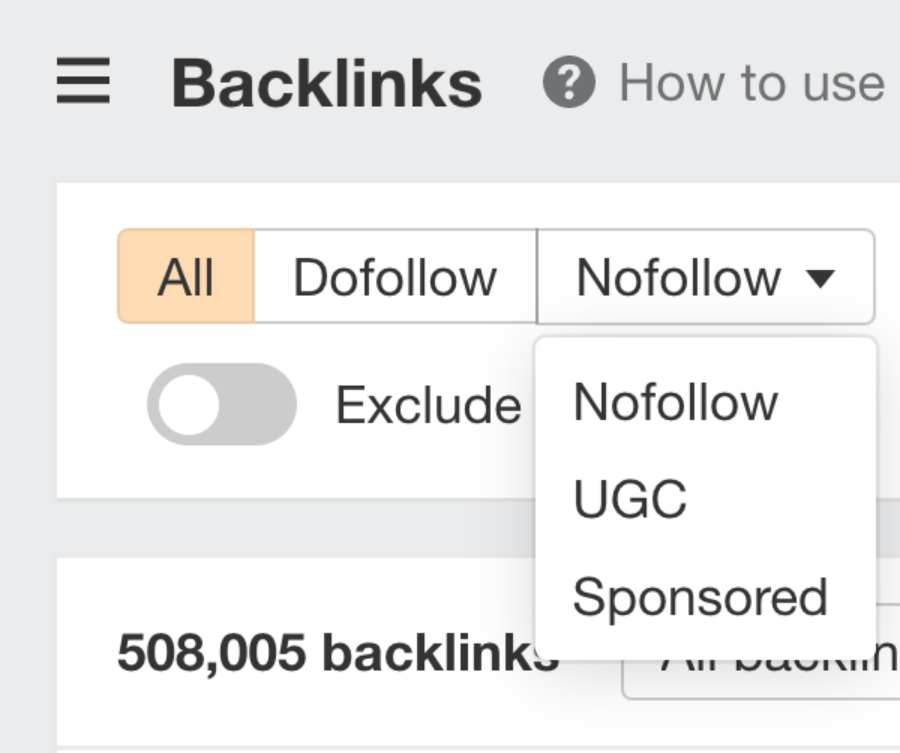
Existing backlinks are two major types: Dofollow and Nofollow.
Dofollow backlinks are normal links that search engines identify and apply when establishing the authority and ranking of a website. Such links transfer the link juice, which enhances the visibility of the linked page in search results.
Nofollow links include an HTML element telling search engines not to follow the link or transfer any authority. They are usually applied to user-created content or when the site prefers that the other page be none of its own.
Dofollow backlinks have a direct effect on SEO; still, nofollow backlinks are capable of driving traffic and making the brand more visible, despite not having a direct effect on search engine rankings.
Ahrefs.com
According to Ahrefs, nofollow links are still considered to be included in a natural, diverse backlink profile.
3. How do search engines perceive backlinks?

iStockphoto.com
Search engines view backlinks as valuable signs of a website’s credibility, authority, and relevance. In the process of web crawling, search engines analyze the backlink profile of a website to determine its general reputation.
To begin with, search engines take into account the number of backlinks received by a website. When there are more backlinks, it indicates that the site is popular and is trusted by other Internet sources.
Secondly, search engines consider the text of the anchor in the backlinks. The anchor text is the contextual information about the content of the linked page.
In addition, search engines consider the variety and naturalness of a website’s backlink profile. The presence of a wide range of backlinks with different domains and sources means that they have been gained in an organic way, which means that they are more trustworthy.
Backlinks assist search engines in determining the popularity, reputation, and expertise in a subject matter, which affects the visibility and ranking in SERPs.
4. Quality vs. Quantity: Debunking the Myth
The topic of quality vs. quantity is the subject of attention in the world of backlinks. Although it is commonly assumed that an increased number of backlinks results in improved SEO performance, the fact of the matter is that backlink quality matters more.
In this section, we shall dispel this myth and discuss why it is imperative to work on high-quality backlinks in order to achieve good search engine optimization.
Understanding the Concept of Link Quality

iStockphoto.com
Link quality is a concept used to evaluate the value, relevance, and credibility of a backlink. Various factors, such as the linking domain’s authority and reputation, the link content’s relevance, and the linking patterns’ naturalness, determine link quality.
Good backlinks are those from reputable sites that are regarded as authoritative by search engines. These links are pertinent to the content they are attached to, have correct anchor text, and are not purchased.
The quality of links is an important feature of SEO because search engines value and attach more importance to high-quality links in ranking algorithms.
The Influence of Authoritative and Relevant Backlinks
Search engine rankings are greatly affected by authoritative and relevant backlinks. Authoritative sources such as reputable and established websites linking to a website are a signal to the search engine of the reliability and quality of the content. This may result in a subsequent increase in visibility and better ranking in search.
On the same note, backlinks from websites that are closely related to the content and topic of the linked page are also weighty. These links promote the topicality and context of the content and increase its chances of ranking highly in connected search queries.
Backlinko.com
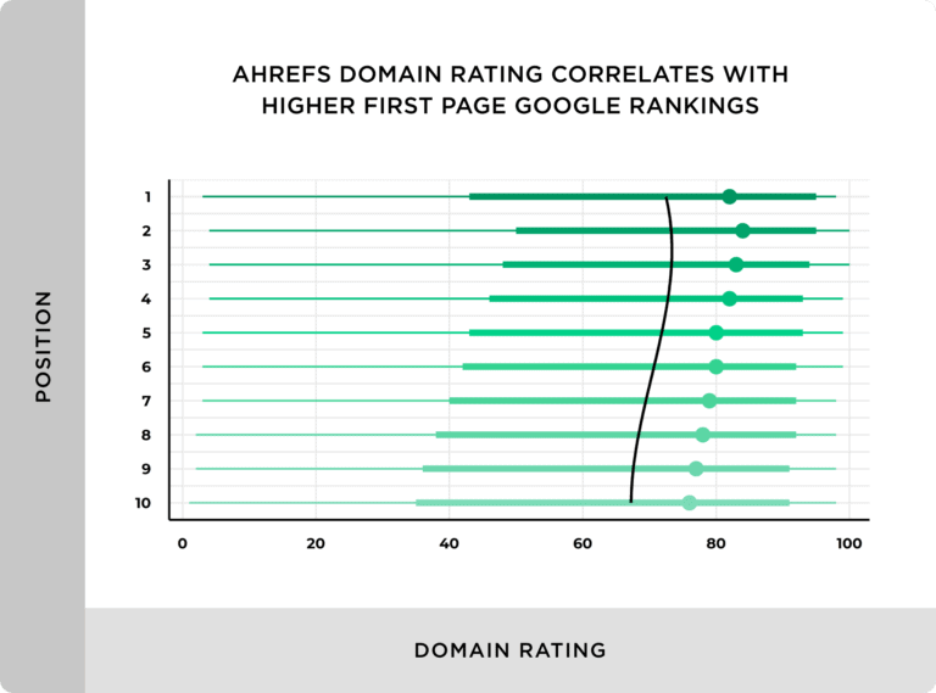
According to Backlinko, the number of referring domains linking to a page, rather than the total number of backlinks, correlates best with Google rankings.
Why a few high-quality backlinks can be more beneficial than numerous low-quality ones?
A small number of quality backlinks may be more effective than a lot of low-quality ones for various reasons. Let’s have a look at them:
- To begin with, good backlinks are usually from quality sources and websites that are authoritative and reputable, which have more weight in search engine algorithms. This can greatly enhance the credibility and presence of a site in search engines.
- Secondly, quality backlinks have a higher chance of generating relevant referral traffic from users who actually have an interest in the content that is being linked to. Low-quality backlinks, on the contrary, might not drive quality traffic and are detrimental to the reputation of a website.
- Finally, search engines emphasize quality over quantity, so a small number of authoritative backlinks can have a more significant effect on search results than numerous low-quality backlinks.
Factors Influencing the Optimal Number of Backlinks
The optimal number of backlinks that a website should have depends on various factors. These factors are important to know to ensure that the balance between quantity and quality is achieved to have a strong backlink profile. These are the main points that should be taken into consideration:
- Authority of the Domains being linked to: Backlinks from authoritative domains have more significance and can have a great influence on search engine rankings.
- Relevancy of the Linking Domains: The objective is to establish a system of backlinks to websites that contain similar topics or attract the same audience as your site.
- Natural Acquisition of Links: Search engines want natural backlinks that are earned (not manipulated or acquired) and not purchased.
- Link Diversity: It is desirable to have varied backlinks. Efforts should be made to get different forms of links, such as blogs, news websites, industrial directories, and reputable publications. It is important to have a variety of backlinks to be successful in SEO.
- Competitor Analysis: The inclusion of backlink profiles of your competitors may provide useful information on the optimum number of backlinks.

iStockphoto.com
- Website Size and Age: Smaller or newer websites might have to begin with fewer backlinks (10-20, generally) and increase over time. In the meantime, a larger or established site might be in a position to manage more (often over 50 and sometimes even in the hundreds).
- Link Velocity: Link velocity refers to the rate or frequency with which backlinks are obtained over a given time period. A natural link speed is important and should be maintained, and the number of backlinks should be obtained gradually instead of a large number. Ahrefs discovered that 1-ranking pages still have followed backlinks coming in at the rate of about 5-14.5 percent a month, with a steady stream, not in bursts.
- Quality vs. Quantity: As it has been said, the quality of backlinks is more significant than quantity. Although having many backlinks may be beneficial to the SEO process, having a few high-quality backlinks can have a substantial effect on the process due to authoritative sources.
So How Many Backlinks Do I Need?
Keep in mind that the most effective number of backlinks may differ with each site based on its objectives, field, and competition.
Semrush.com
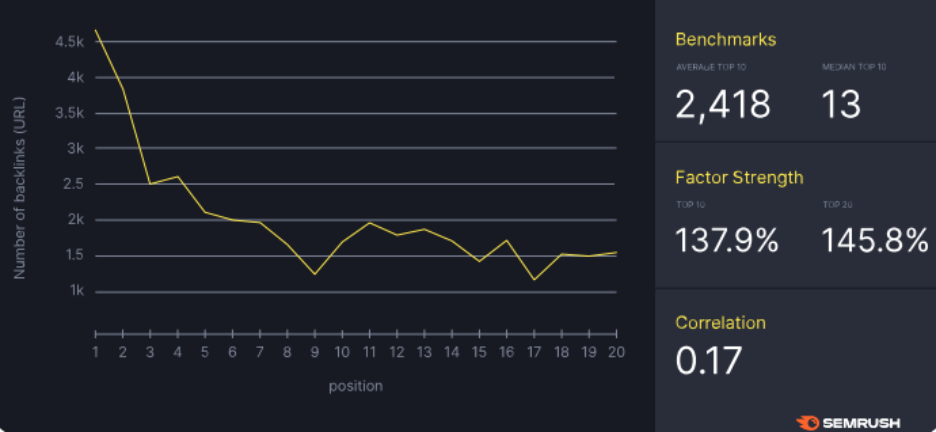
A 2024 Ranking Factors Study by Semrush revealed that the average number of backlinks on pages that rank high is 2,418, but the median is only 13, indicating that competitiveness in SEO does not depend on a specific number of backlinks, but on a strategy that fits your page and industry. One should take into account several factors that could affect this range, such as industry competition, quality of backlinks, relevance in relation to the content of the websites, and the general SEO strategy used.
Taking these factors into consideration enables businesses to tailor their backlink acquisition and optimization, resulting in better online visibility and greater organic search rankings. Note that an effective approach to SEO involves the number and quality of backlinks to achieve the desired results.
To find out how many backlinks should be used to be successful, it is necessary to examine the peculiarities of the site, analyze the competition, and coordinate the backlink policy with the intended goal.
Through constant checking and review of your backlink profile, you will be able to come up with valuable information to make an informed decision on what the best number of backlinks to have on your site would be.
Cost of Link Building Strategy
Based on the above paragraphs, you have no doubt realised the complexity of creating high-quality backlinks. Considering the sheer number of people who get you genuine and natural links to your site, it is not an inexpensive service.
Outreach Crayon charges the following for their link-building services:
|
Services |
Minimum Cost (Based on factors like DA/traffic etc.) |
Maximum Cost (Based on factors like DA/traffic etc.) |
|
$60 |
$350 |
|
|
$80 |
$120 |
|
|
$60 |
$100 |
|
|
Blog Writing Service |
$0.04 |
$0.08 |
The Link Building Strategy
Establishing a strong link building plan is essential in enhancing search engine visibility and organic traffic for a given website. The following are five of the best link building strategies:
1. Guest Blogging

iStockphoto.com
Guest blogging or blogger outreach involves writing quality material on websites that are relevant to the industry in exchange for a backlink. It allows you to demonstrate your knowledge, be exposed to a new audience, and receive authoritative backlinks.
2. Broken Link Building
iStockphoto.com
Broken link building is the process of finding broken links within external websites and approaching the owners of these websites to suggest that they replace the broken links with appropriate links to your content.
3. Influencer Outreach

iStockphoto.com
Influencer outreach is the process of establishing contacts with influencers and people who have expertise in this industry and can be used to gain valuable backlinks and exposure. Cooperate in terms of content, interviews, or even partnerships that may result in natural backlinks on their web pages or social media accounts.
4. Content Promotion and Outreach

iStockphoto.com
Create a content promotion plan, which includes contacting the websites, bloggers, and influencers who could be interested in your content and willing to share it.
5. Internal Link Building

iStockphoto.com
Internal link building focuses on linking relevant pages within your website. Create a strong internal linking structure by identifying cornerstone content, important landing pages, and related blog posts.
Remember, while implementing these strategies, it’s essential to prioritize quality over quantity. Seek authoritative and relevant websites for link acquisition, avoid manipulative tactics, and focus on building genuine relationships. Regularly monitor your backlink profile, and identify and disavow low-quality or spammy links to maintain a healthy link profile.
Link building is an ongoing endeavor requiring patience, persistence, and consistent dedication. By combining these strategies and adapting them to your specific industry and goals, you can enhance your website’s online presence, improve search engine rankings, and attract targeted organic traffic.
Monitoring and Measuring Backlink Success
Monitoring and measuring the success of your backlink efforts is essential to gauge the effectiveness of your link building strategy and make informed decisions for ongoing optimization. Here are vital steps to monitor and measure backlink success:
Backlink Tracking Tools
Employ backlink tracking tools such as Ahrefs, Moz, or SEMrush to closely monitor factors like the volume of links that point to your website, the domain authority of linking websites, and the general condition of your backlink profile.
Referral Traffic
Monitor your website’s referral traffic to assess the impact of backlinks on driving visitors to your site. Platforms like Google Analytics can aid in identifying the primary sources of referral traffic that generate the highest amount of website visitors.
Search Engine Rankings

iStockphoto.com
Maintain visibility in search engine rankings by diligently monitoring and tracking your progress with target keywords. An increase in rankings for relevant keywords indicates the positive impact of backlinks on your website’s visibility.
Link Quality Assessment
Continuously assess the quality of your backlinks. Look for high-authority and relevant websites linking to your content. Use tools like Google Search Console to identify and disavow toxic backlinks.
Competitor Analysis
Analyze your competitors’ backlink profiles to gain insights and benchmark against their success. Look for gaps where your competitors lack backlinks, providing you with a chance to gain an advantage.
Link Conversion and Goals
Define the objectives you aim to accomplish with your backlink strategy. Whether it’s generating leads, increasing sales, or improving brand visibility, establish key performance indicators (KPIs) to measure the conversion impact of your backlinks.
Ongoing Optimization
Regularly review and optimize your backlink strategy based on performance metrics. Refine your outreach strategies, content creation, and relationship-building endeavors to enhance both the caliber and quantity of your backlinks.
Remember, monitoring and measuring backlink success is an iterative process. Continuously analyze the data, refine your strategy, and adapt to changes in the online landscape.
By understanding the impact of your backlinks and making data-driven decisions, you can enhance the effectiveness of your link building efforts and achieve better results for your website’s visibility, authority, and organic traffic.
Avoiding Common Pitfalls in Link Building
Link building holds significant importance within the realm of SEO. Still, navigating the process carefully is essential to avoid common pitfalls that can damage your website’s reputation and adversely impact its search engine rankings.
Buying or Exchanging Links
Avoid purchasing or exchanging links, as it goes against search engine guidelines. Instead, focus on organic link acquisition through high-quality content and genuine relationship-building efforts.
Low-Quality and Irrelevant Links
Building a backlink profile with low-quality and irrelevant links can harm your website’s SEO. Quality should always take precedence over quantity.
Link Schemes and Manipulative Tactics
Engaging in link schemes or manipulative tactics, such as link farms, automated link-building software, or hidden links, can have severe consequences. Stick to ethical and sustainable link-building methods.
Ignoring Link Quality
Focus on acquiring high-quality backlinks from reputable sources. Don’t prioritize quantity over quality.
Neglecting Link Diversity
It’s important to have a diverse backlink profile. Relying on a single type of backlink or from a limited number of sources can raise red flags. Seek links from various domains to showcase the natural diversity of your backlink profile.
Neglecting Content Quality
The excellence of your content is pivotal in attracting natural backlinks organically. Invest in creating high-quality, valuable, and shareable content that naturally attracts backlinks from authoritative sources.
Lack of Outreach Strategy
Simply publishing great content is not enough. Implement an outreach strategy to promote your content and build relationships with relevant influencers and webmasters.
Not Monitoring and Disavowing Toxic Links
Regularly monitor your backlink profile and identify any toxic or spammy links. Use tools like Google Search Console to disavow such links, indicating to search engines that you don’t endorse or want association with them.
Steering clear of these common traps will help you construct a robust and lasting backlink portfolio, elevating your website’s visibility, authority, and search rankings. Prioritize quality, relevance, and ethical practices to achieve long-term success in your link building efforts.
FAQs
Q: How many backlinks do I need to rank on page one of Google?
There’s no universal number. Semrush’s 2024 Ranking Factors Study found the median top-ranking page has just 13 backlinks, though competitive keywords can require significantly more.
Q: Do nofollow backlinks help SEO?
Nofollow links don’t pass ranking credit the way dofollow links do, but they still contribute referral traffic and brand visibility, per Ahrefs.
Q: Is it better to have more backlinks or more referring domains?
More referring domains — Backlinko’s research found referring domains have a stronger correlation with rankings than raw backlink count.
Q: How fast should I build backlinks?
Gradually. Even top-ranking pages gain new backlinks at a steady pace of roughly 5%–14.5% per month rather than in bulk bursts (Ahrefs).
Q: How much does professional link building cost?
It varies by service and domain authority. Outreach Crayon’s blogger outreach services range from $60–$350 per link depending on the linking site’s traffic and DA/DR.
How Many Backlinks Do You Actually Need?
In conclusion, the question of how many backlinks you need for effective link building doesn’t have a one-size-fits-all answer. The number of backlinks required depends on website goals, industry, competition, and available resources.
Achieving the desired results involves striking the right balance that aligns with your unique objectives and maximizes outcomes.
For smaller or newer websites, starting with a modest number of backlinks, such as 20 to 50, can lay a solid foundation for growth. As your website gains traction and establishes its presence, gradually increasing the number of backlinks becomes essential to stay competitive. In highly competitive industries, surpassing the 100 backlinks mark may be necessary to stand out from the crowd and significantly impact search engine rankings.
Remember, quality over quantity is crucial. It’s not just about accumulating a massive number of backlinks but acquiring high-quality, authoritative links that are relevant to your niche. Building a diverse and natural backlink profile and a comprehensive SEO strategy will maximize your website’s potential for success.
Ultimately, effective link building requires a strategic and adaptable approach. Stay focused on your goals, monitor your competitors, and continuously evaluate and adjust your backlink strategy to ensure your website’s continued growth and success in the dynamic digital landscape.

About the author: Vibhav Gaur, Business Head
Vibhav Gaur leads strategic operations and business growth at the organization. With a strong background in digital transformation and customer-focused solutions, he has helped numerous clients streamline their web presence and scale efficiently. His leadership ensures seamless execution across teams, with a commitment to delivering results and fostering innovation in every project.


