
Search behavior has transformed drastically within the last couple of years. The older marketing funnel that used to direct users to search to click to site action is no longer effective.
The most popular method of how people get information now is through zero-click AI search but plenty of brands still measure success by the traditional measure of success by traffic alone. In fact, 58.5 percent of U.S. searches now end without a click, with more users retrieving answers directly on the search page without accessing a site.
This change necessitates a different strategy. Instead of lamenting about the missed clicks, progressive marketers must understand the processing of information by users and how they can capitalize on this to get leads, even in a situation where the user does not visit a page. Brands optimized with zero clicks can attract attention, build trust, and convert without using traditional site visits.
This blog demonstrates how to turn zero-click AI search into leads, why visibility is more important than clicks, and how brands can align the content, measurement, and conversion systems to the modern AI-driven search environment.
Understanding Zero‑Click AI Search
Zero-click search is when the user types the query and finds the complete answer on the result page without the need for further clicks. AI Overviews, knowledge panels, featured snippets, or generative AI solutions tend to offer these solutions. Besides this, the phenomenon of zero- click search has gained more influence in determining how people seek information over the internet.
This has been building traction. Zero – click search is not limited to the old days of SERP functionality- AI is changing the manner in which people find answers. Such transformation is indicative of how AI is changing the traditional marketing funnel, in which discovery and decision-making processes tend to occur prior to a user even opening up a site.
Such a shift suggests that a marketer cannot necessarily gain visibility and engagement in what was previously known as click-through rates and page visits. Brands should ensure that their content is discoverable, authoritative, and organized in a way that can be easily accessed by the AI systems.
Why the Traditional Funnel No Longer Works
The typical marketing funnel resembles the following:
Search → Click → Website → Engage → Convert
This model assumes:
- Users click on a search result
- SEO drives that click
- Traffic correlates with conversions
In 2026, this trend is, however, changing. Nowadays, lots of users do not open a website and receive answers on the SERP or through AI-based tools. They may be interested in a product or a service even without clicking on it beforehand, simply based on the information provided. Consequently, the conventional KPIs, such as organic traffic and clicks, no longer reflect influence, preference, and intent reliably.
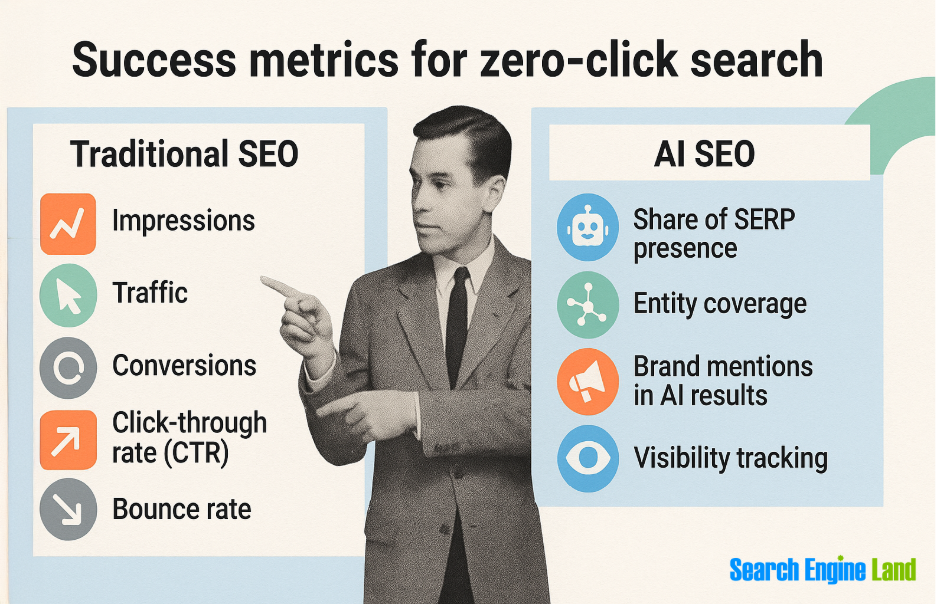
This does not imply that marketing has lost its value. Rather, it shows that the decision-making process now begins earlier in the discovery journey, often before a user clicks on a website. Brand visibility in AI responses affects the consideration of the purchase, although the users had never been to your site.
Impact of AI on the Modern Marketing Funnel
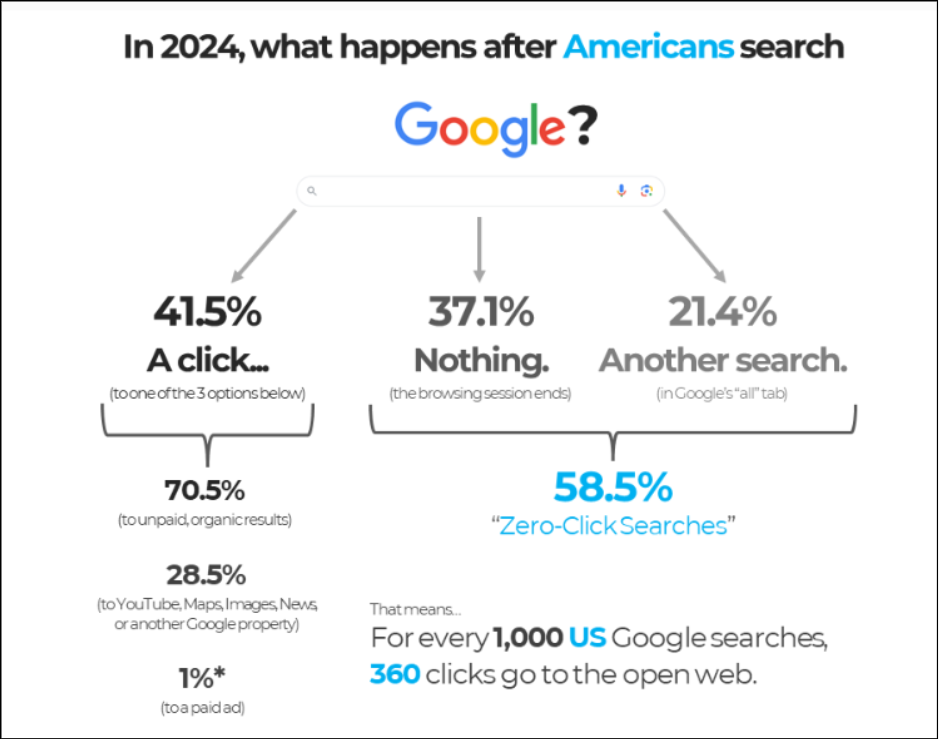
Of all the most radical inventions that have revolutionized digital marketing, the impact of AI in changing the marketing funnel in the modern world is one of them. The buyer now interacts with generative AI before visiting a site. According to zero- click search research, they pose conversational questions, get summaries that are curated by AI, and make decisions based on AI responses.
This does not imply that AI is replacing search results, but instead replacing discovery touchpoints. Customers do not need to click first and then start researching. They would rather collaborate with the synoptic, brief answers, and narrative format generated by AI. And this is to say that, despite typing in your brand name or visiting your site, your presence in AI will influence their experience.
As the brand is perceived as a credible source in AI response, the user familiarizes themselves with the brand, establishing top-of-mind awareness. That can drive potential direct traffic, referrals, social interaction, and eventually result, even when the traditional traffic levels do not increase.
Such a shift does not reduce clicks; it merely lengthens the upstream effect, i.e., marketers will have to optimize in other ways and measure more than clicks.
Turning Visibility into Leads
1. Prioritize Entity and Authority Signals
The pages are not indexed like traditional search engines. They do not just enter the keywords but find particular entities (brands, products, topics, people, and factual evidence) to understand the context and justify the information.
Therefore, brands must:
- Use structured data (JSON-LD) on products, persons, and organizations
- Add schema markups to important pages
- Make brand entity signals consistent (name, logo, product taxonomy)
- Add and optimize the knowledge graph profile
2. Create Intent‑Rich, Answer‑Focused Content
AI focuses on factual and concise responses. Rather than lengthy content burying answers, organize content to provide brief responses followed by in-depth information.
Use frameworks like:
- Question → Answer → Expand
- Fact → Context → Example
This increases your visibility in AI responses and featured snippets, which serve as zero‑click visibility points.
3. Optimize for AI Overviews and Generative AI

AI Overviews are a compilation of a number of sources that provide answers to the questions. In these summaries, your content can convince people to make a decision without clicking.
This requires:
- Consistent, updated content
- Clear, authoritative statements supported by data
- Relevant references to the credible sources
AI has the ability to cite you without the user having to visit your page. This also leads to brand loyalty, which increases the chances of conversion in the future.
4. Align Paid and Organic Efforts
Zero-click search affects the organic search as well as the paid search. When the responses offered by the AI are present in the paid advertisement, it is going to decrease the number of clicks; therefore, companies should:
- Combine pair zero-click visibility and targeted lead magnets
- Take advantage of dynamic remarketing to attract non-clickers
- Optimize PPC for high‑intent conversions (not just clicks)
A combination of paid and organic initiatives will enhance your brand awareness and will also provide quantifiable exposure.
5. Capture High‑Intent Post‑Search Actions
Someone not clicking does not mean that they never engage. Leads can be obtained by:
- Branded search results that offer newsletter signups
- Webinars and downloadable resources are promoted in AI‑friendly formats
- Conversational AI bots that capture intent data when users search your brand
It is through these interactions that leads are driven even in the absence of any conventional click pathways.
Measuring What Matters Now
The old measures are not enough in a zero-click world. Marketers need to expand their KPIs to incorporate:
Visibility Metrics
- Share of SERP presence (all features, not just listings)
- Entity coverage and knowledge panel appearances
- AI reference and frequency of citation
- Brand presence in AI modes (ChatGPT, Gemini, etc.)
Engagement Metrics
- Time spent on tools after impression
- Repeat brand searches
- Assisted conversions (even without immediate clicks)
Lead Metrics
- Branded signups
- Qualified form fills associated with AI interactions
- Direct traffic after AI visibility bumps
Monitoring these provides a more holistic view of how zero-click search can be used to drive real business results.
Case Examples: Success in a Zero‑Click World

Consider two hypothetical industrial brands:
Brand A is only optimizing based on traditional SEO. They are ranking high on key terms but fail to achieve any traffic as zero‑click rates grow. Their analytics demonstrate that they have a high impression but a low click rate, not to mention a low conversion rate.
Brand B uses a visibility-first approach. They optimize entities, answer-oriented content, and citation opportunities for AI systems. Although their traffic is not increasing, their brand is mentioned repeatedly in AI Overviews and assistant responses. Over time, Brand B sees:
- More branded search traffic
- Higher direct visits
- Greater newsletter signups
- Growth in qualified lead volume
This is due to the fact that the AI visibility creates trust and recognition even before any click occurs.
Concluding Lines
Zero-click AI search is not a threat; it is a total revolution in the way people search and evaluate information. The marketing methods that concentrate on clicks alone lack the power, the credibility, and the changing buyer behavior.
The currently successful brands are the ones that consider visibility on AI systems and search engines and can present their content in the locations where the user wants to find answers, even before opening a webpage. To be competitive, marketers need to develop structured data that is authoritative and that can be easily processed and accessed by the AI systems.
By keeping an eye on the visibility beyond the traditional metrics of traffic and building avenues of engagement outside the standard line of clicks, brands can continue to remain relevant in this dynamic environment.
In a zero- click world, the modern marketing funnel is often initiated much earlier, before an end user visits a website. Using a strategic approach, AI-based search visibility has the potential to raise awareness, build trust, and ultimately reach qualified leads.
The businesses that are eager to remain ahead could take into consideration methods that demonstrate how AI is transforming the conventional marketing funnel and learn how to transform AI awareness into valuable lead generation.


