
In an era of constant shift, the field of digital marketing has recently been chipped with yet another significant update. In simple terms, search engine optimization is not what it was.
The general tactic that involves stuffing keywords, both location-based and long-tail, is a thing of the yesteryears now. This simply implies that an innovative approach to play has emerged.
Google’s I/O 2025 updates have paved the way for marketers to rely on natural language understanding, user intent, and machine learning.
And nowhere was such a move more apparent than at Google Meet 2025. This is where the BIG TECH TEAMS announced some of the most advanced AI potential, ushering in a new age for how users think about link-building and online visibility.
With Gemini-powered search assistants, AI mode deep search, AI forecasting and insight tools, and many other contextual text understanding, the search engine giants made one thing quite clear: the algorithms are tasting evolution. And with them, marketers must evolve, too.
Having said that, link-building is not a game of figures and ranks anymore; it’s a quest to gain trust and authority. Acquiring links would now hinge on how well the text tends to satiate AI-driven search intent.
However, to uncover this, one must understand the SEO updates in their entirety.
Google I/O 2025 SEO Changes SEOs Can’t Ignore

The new things from Google I/O 2025 suggest that SEO methods need a major rethink:
- More Than Just Keywords: AI Mode’s “query fan-out” and capacity to manage lengthy, chatty questions demonstrate how crucial topic groupings and entire material can become. SEO planning may need the creation of connected content that completely covers major topics and what consumers truly mean when they ask natural questions.
- Why E-E-A-T and Real Value Matter: As AI models generate answers from a variety of sources, the material must demonstrate a high level of experience, expertise, authority, and trustworthiness. Showing that you provide something unique and trustworthy is essential if you want AI to mention you in Deep Search and AI Overviews and remain prominent.
- How to Get Seen in AI Mode and AI Overviews: The main goal is to become a trustworthy source that AI uses and mentions. Write simply and directly, respond to typical questions, and back up your claims with strong evidence. To appear in AI replies, your content must be configured so that AI can quickly access it. This includes clear titles, brief responses to frequently asked queries, and extensive use of structured data (schema markup).
- Understanding the Importance of Structured Data and Clear Content: It is critical that AI can easily read, understand, summarize, and accurately cite your information. Well-organized information and proper schema markup are extremely beneficial in this regard.
- Using Super-Personalization to Reach the Right People: Since AI alters search results based on personal information, content planning must be more sophisticated, taking into account various sorts of people and their conditions. The concept of a fixed #1 ranking for a term is eroding.
And with that, let’s break down the subject of link-building in the age of AI: strategies inspired by Google I/O 2025 that may help a user stay ahead of the curve in the era of AI.
1. AI-Driven Content for Natural Link Earning
Google said that high-quality content will always be a top-ranking criterion, but now it will be analyzed for relevance and depth by AI. AI-powered systems can look at huge amounts of data to help create content that fits with what’s popular, how people act, and what they expect semantically.
This makes it easier to link to.
For example, content assistants that work with Frase, Surfer SEO, and ChatGPT can give you detailed information about your competitors’ gaps and keyword clustering in real time. But curating is just the first step.
To get links naturally, focus on:
- Giving data-backed stories new points of view
- Adding quotes from well-known people in the field
- Organizing content so that it is easy to skim, read, and enjoy
Industry magazines, forums, and content aggregators are more likely to link to and reference your content if it is more specific and useful to a small group of people.
2. NLP Optimization: Writing for Humans & AI Alike
One of the greatest topics at Google I/O was how search engines are getting better at understanding natural language processing (NLP). Google’s algorithms can now understand tone, context, and relationships, not just words.
To make links more valuable in this situation:
- Don’t only think about keywords. Organize your content by subjects and things.
- Make sure that paragraphs and subheadings naturally answer long-tail questions.
- Use structured data and schema markup to make your content machine-readable and rankable in featured snippets.
NLP content that is well-optimized not only ranks but also gets cited. Publications that need expert citations or short explanations generally go to NLP-optimized pages since they are clear, trustworthy, and full of context.
3. Voice Search & Conversational Linkability
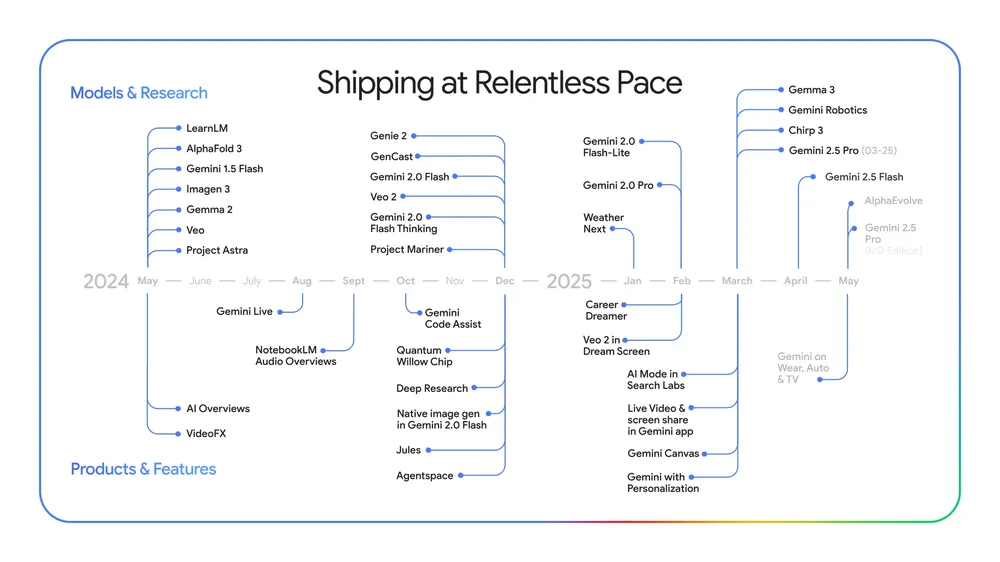
Google put more effort into voice-enabled search at I/O 2025 by adding more Gemini integrations to Android and smart devices. More and more people are asking their questions out loud on phones and smart devices; therefore, websites need to change their content to fit these kinds of questions.
This change has an effect on link-building in the following ways:
- Make information in the style of FAQs that answers direct voice-type questions like “What is the best CRM for small law firms?”
- To match spoken searches, use long-tail, natural phrasing and question-based headings.
- In the opening few lines of each section, write short, authoritative answers. This is great for rich snippets and voice pulls.
What does this mean for links?
This is because prominent snippets, especially voice results, are more likely to be used in other content. If people know they can get rapid, spoken answers from your site, other people who write content will link back to it.
4. Data-Driven Outreach Powered by Predictive AI
Old-school outreach was like spraying and hoping. AI techniques are making it much more precise these days.
Google showed off some new API extensions at I/O that will let you add search trends and content performance data to your SEO stack. Platforms like Pitchbox, Respona, and Postaga already help you execute predictive outreach efforts. These campaigns target links based on their engagement history, domain authority, and content velocity.
How to update your outreach:
- Use AI to guess which websites are most likely to respond and link back based on how relevant their audiences are to yours.
- Use NLP-trained models to automate the writing of tailored emails to get more people to open them.
- To find fresh sources, keep an eye on open-source citation databases, such as Wikipedia editors or open-access publications.
5. Interactive, Visual & AI-Enhanced Content Experiences
Google’s most recent AI demos put a lot of focus on multimodal learning, which is how people interact with not only text but also visuals, audio, and interactive elements. This opens the door to new types of material that others share and connect to.

Some formats that work are:
- Interactive calculators, like “AI ROI Estimator” for tech businesses
- Infographics that use APIs to pull live data and show it in real-time
- Articles with AI-generated video explainers inside them
- Augmented reality (AR) previews of goods or services
These kinds of material are easy to distribute, and bloggers, journalists, and listicle makers often use them to make their pages more interesting.
Google’s algorithm now rewards useful multimedia with a showy design. This means that content that has a clear purpose and makes the user experience better is rewarded. People link to tools, not just articles.
Isn’t that quite a boost?
6. Machine Learning for Link Analysis & Competitive Gap Mining
Google didn’t say much about its internal ranking signals (as usual), but it did say that graph neural networks (GNNs) might be used more often to figure out how the material is related and how good links are. In plain terms, smarter AI is figuring out which links are important and which are just for show.
According to a study, nearly half of all businesses, or fifty percent, have utilized AI to write content. Marketers may use tools like these to think in the same way:
- Ahrefs’ Link Intersect: Find out which sites connect to your competitors but not to you.
- Chat with Screaming Frog & GPT: Use link data to crawl your site and ask GPT to find patterns of material that isn’t doing well.
You can find link gap possibilities by using machine learning to look at your rivals and industries that are similar to yours. These are places where high-value domains are already connected to content that is similar to yours but not yours.
7. UX-Driven Link Attraction: Build for People, Rank for AI
One of the most interesting things that happened at Google I/O 2025 was the introduction of Page Experience 2.0 signals, which take into account user behavior, mobile design, and accessibility metrics when ranking pages.
In simple terms, websites that are easier to use earn better rankings and more links.
To get natural backlinks to your site, do the following:
- Core Web Vitals are optimized, especially LCP and CLS.
- Put accessibility features first, such as being able to read material aloud and having accurate alt text.
- Make your layout less confusing by using simple CTAs, a few popups, and pages that load quickly.
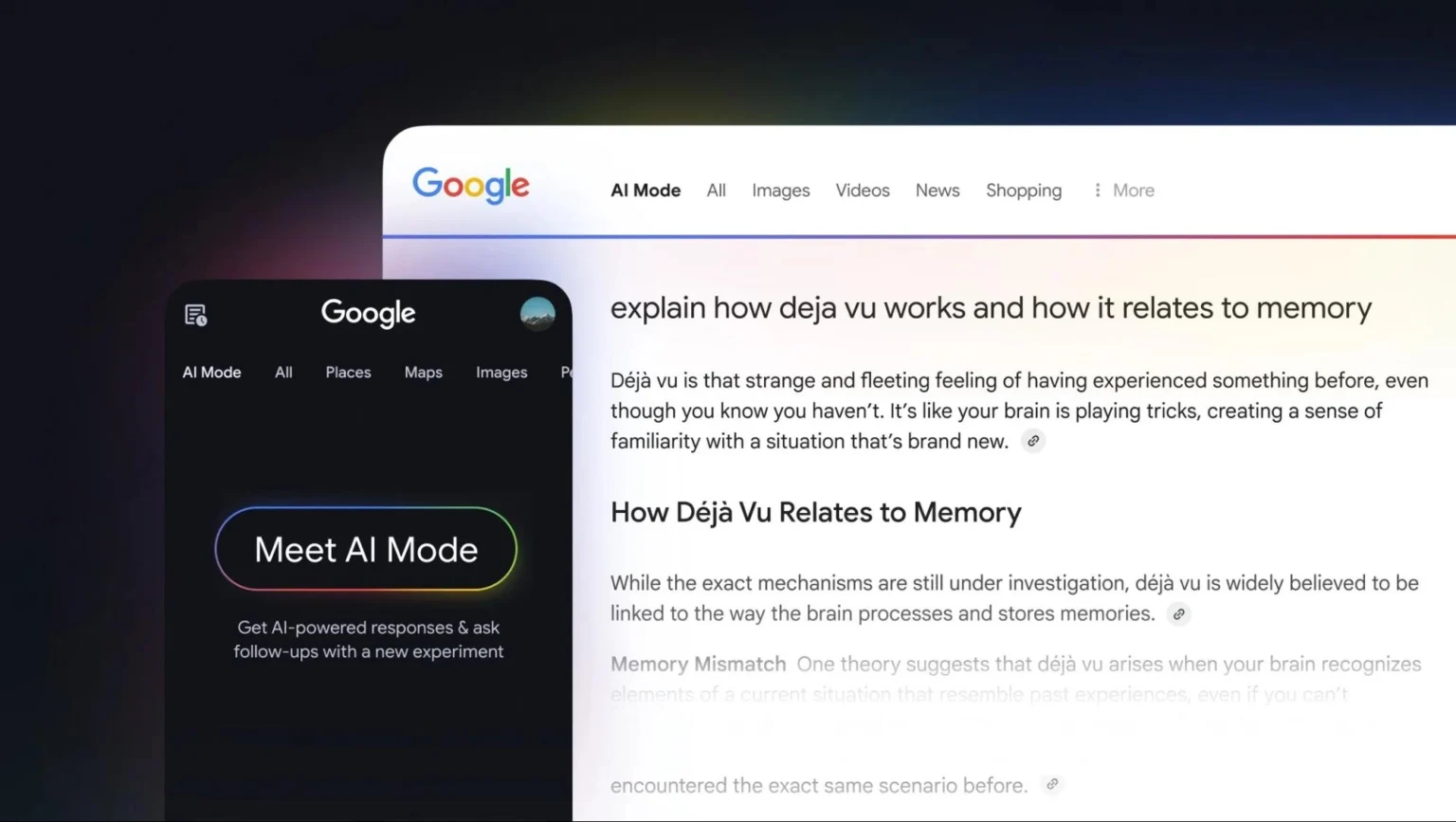
Google calls AI Mode a “Total Reimagining of Search”

AI Mode is designed to handle lengthier, more complex queries that you pose in a conversational manner. Besides, it generates responses by gathering data from multiple sources rather than merely providing you with a list of links.
It frequently presents information as a narrative or analogy.
In spite of that, this mode breaks up difficult questions into more manageable subjects. Then, it uses Google’s Knowledge Graph, Shopping Graph, and live web information to simultaneously search for all of these topics.
After considering all this data, the AI comes up with a comprehensive response. This is made feasible by the most recent Gemini models, and Gemini 2.5 will be available in Search in the United States.
AI Mode offers Deep Search (also known as Deep Investigation) for extremely in-depth scrutiny. In order to generate a comprehensive report containing sources and data, this feature performs even more “query fan-out,” generating hundreds of searches.
Additionally, Deep search is becoming more intimate. Uploading your files is an option, and in the near future, it will integrate with Gmail and Google Drive to enhance its reporting structure.
“Personal Context” is a significant modification in AI Mode. With your consent, AI Mode can provide you with more individualized search results by using data from your other Google products, such as YouTube, Gmail, and Maps. The goal of this intense customization is to make search results more pertinent to you, specifically.
For example, when searching for an apartment, AI Mode may use your saved locations on maps or your email correspondence to identify more suitable properties.
What Does AI Mode Mean for SEO & Link-building?
The notion of a single search results page (SERP) or AI response for all users may disappear due to this degree of customization.

Making sure your content is simple for the AI to identify and utilize when it generates personalized responses for particular demographics may, therefore, be more important for SEO success than achieving a single top ranking for a keyword.
This implies that you must seriously consider your target audience and produce content tailored to them.
Link Building’s Tomorrow: Contextual, Creative, and AI-Powered
One thing was evident at Google I/O 2025: AI isn’t just a gimmick; it’s the way modern search works. This is both a problem and an opportunity for SEOs and digital marketers. It’s not about cold calls or old directories anymore when it comes to link building in the AI age. It’s about building trust, utilizing data, and having experiences that work across all platforms and formats.
You don’t only build links when you fit with Google’s new goals, which include contextual content, multimodal interaction, and intent-driven structure. You develop trust, gain opportunities to grow, and achieve long-term organic growth.
As we enter a new era of SEO defined by Gemini, generative models, and machine-learned behavior patterns, think about this: Is your link-building approach changing quickly enough?
Because the AI-driven web is already here.

About the author: Vibhav Gaur, Business Head
Vibhav Gaur leads strategic operations and business growth at the organization. With a strong background in digital transformation and customer-focused solutions, he has helped numerous clients streamline their web presence and scale efficiently. His leadership ensures seamless execution across teams, with a commitment to delivering results and fostering innovation in every project.


