
Have you ever wondered why certain websites rank so easily while others struggle, even when they target the same keywords?
The answer lies in how modern search engines interpret not only the words people use but also the intent, user context, and the overall relevance of the information. Traditionally, SEO planning was strongly dependent on keyword research, and marketers concentrated on identifying keywords in terms of search volume and competition.
Although keyword research still plays a significant role, this method does not usually help reveal the underlying motivation behind the user’s search behavior. Nowadays, it is not enough to place high-volume keywords to gain meaningful visibility.
In the modern AI-driven search environment, it has become crucial to know what a user is seeking and structure content in a way that answers their needs effectively. One approach that is currently turning out to be extremely effective is prompt research for AI SEO, which helps uncover broader topics, semantic connections, and new content possibilities.
Through a mix of both conventional keyword research and prompt discovery, marketers develop a better and more viable strategy that connects content planning with user intent and changing search engine demands. The following sections elaborate on the major procedures and techniques that enable timely research to become a powerful plan in modern SEO.
What Is Prompt Research in SEO?
 freepik.com
Prompt research is the technique of applying structured AI prompts to search intent, content ideas, and semantic relationships. Rather than just using search volume or keyword difficulty, this method concentrates on what question the user is asking and in what context they are searching.
For example, the prompts can be like, “List the questions users ask when deciding to use an AI tool to optimize the content,” or “Write topic clusters to create a detailed guide to SEO”. These prompts give a basis for the discovery of concealed opportunities, which are not easily noticed by traditional keyword lists.
The data obtained through prompt research enables content developers to write intent-driven articles and guides. This makes content appealing to audiences and indicates topical authority to search engines, making prompt research for AI SEO a potent tool in efficient SEO practices in the modern world.
Prompt Research vs Keyword Research
To better understand the shift from traditional SEO planning and AI-driven strategies, the following table shows the major differences between keyword research and prompt research.
| Aspect | Keyword Research | Prompt Research |
| Primary Focus | Identifies keywords based on search volume, competition, and difficulty | Explores user intent, questions, and topic relationships through AI prompts |
| Approach | Data-driven and keyword-centric | Intent-driven and topic-focused |
| Discovery Method | Uses SEO tools to find popular search terms | Uses AI prompts to generate questions, themes, and content ideas |
| Content Planning | Focuses on optimizing pages for specific keywords | Helps build topic clusters and comprehensive content strategies |
| User Intent Understanding | Limited understanding of deeper search intent | Provides deeper insight into what users actually want to know |
| SEO Outcome | Helps rank for individual keywords | Builds topical authority and broader search visibility |
How Prompt Research Improves Keyword Discovery
Prompt research for AI SEO is not limited to the traditional lists of keywords but rather discovers the intent of the user, adjacent topics, and latent opportunities. Rather than focusing only on popular keywords, it shows questions and topics that are really important to users to drive better SEO strategies.
1. Uncover Hidden Topics
Prompt research assists in the discovery of issues that normal keyword tools fail to identify. An AI-generated prompt can help marketers establish questions, subtopics, and related themes that a list of keywords based on volume would not have addressed, enabling marketers to produce content that meets a broader range of user needs.
For example, exploring common challenges within a niche can expose long-tail queries and context-driven concerns that can be overlooked by competitors. Nonetheless, finding topics is not sufficient.
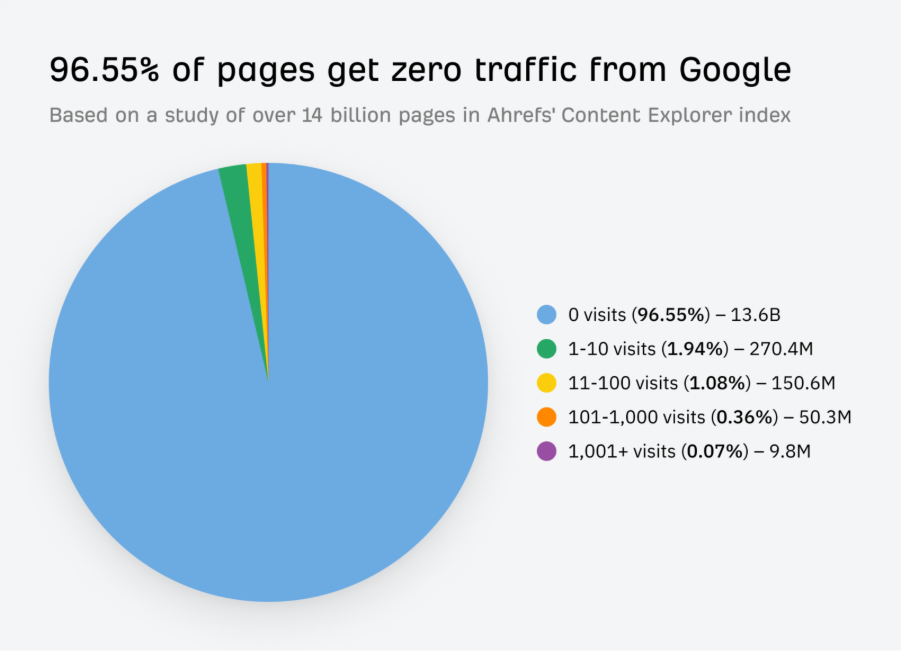
Ahrefs reported that 96.55% of webpages receive none of the organic traffic in Google, which is why it is essential to produce high-quality and linkable content in order to increase both visibility and authority.
2. Focus on User Intent
The other benefit is the emphasis on user intent. Instead of spamming large numbers of keywords, prompt research is done to determine why users are searching for a particular piece of information. This assists in fulfilling actual requirements, be they informational, transactional, or navigational.
Understanding intent, marketers can create certain content that will be appealing to audiences. Consequently, the content attracts visitors as well as retains them, improving dwell time and the overall SEO performance.
3. Build Semantic Clusters
Prompt research also helps in the development of semantic clusters, which entail the grouping of related topics around a theme. These clusters assist the search engines in identifying a site as a source of authority on a topic.
Moreover, clustering enhances internal linking strategies and provides content architecture. Consequently, every page adds to a unified ecosystem that increases topical authority, simplifies navigation, and enables AI and human users to find the necessary information
4. Boost Topical Authority
Prompt research also helps in the creation of topical authorities. Addressing all the related questions and themes in a cluster is an indicator of knowledge to search engines. This, in turn, enhances the rankings of several pages at once.
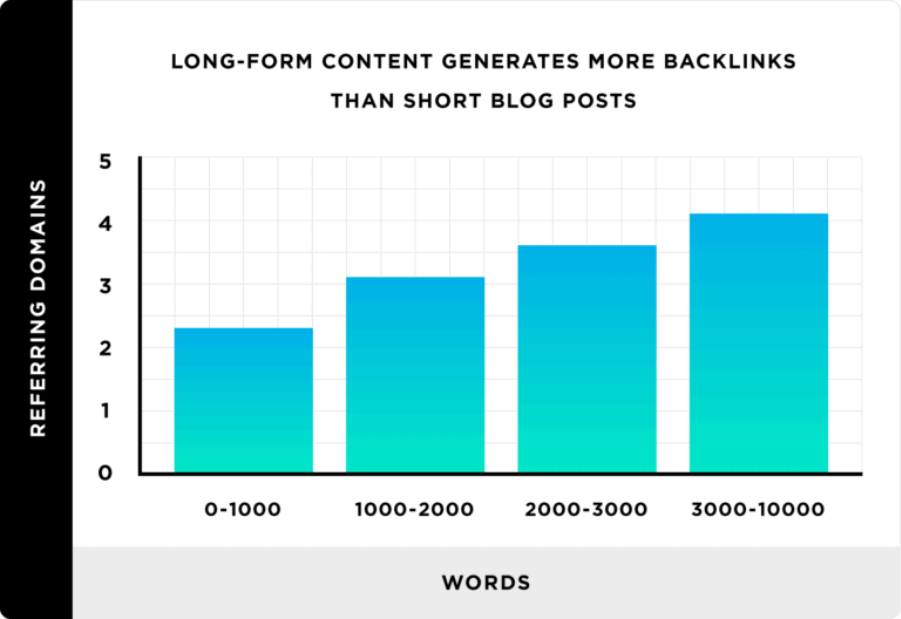
Furthermore, detailed information is more likely to receive backlinks, reinforcing credibility. For instance, long-form content backed up in clusters gets 77.2% additional backlinks than brief compositions, which demonstrates the correlation between depth, power, and findability.
Step-by-Step Prompt Research Workflow
A structured workflow helps make prompt research more effective. By setting objectives, planning prompts, and sorting out concepts, marketers can discover topics and design SEO strategies that align with the user intent.
Step 1. Define Your Goal
Specifying clear objectives of your SEO strategy is the first step towards prompt research. The marketers should identify their target audience, the purpose of the content, and the intent to search.
With the clear definition of goals, the prompts become more focused and help generate ideas that are relevant and consistent with the overall content strategy.
Step 2. Craft High-Intent Prompts

Once the goals have been established, the next action is creating prompts, which are user-intentional. Prompts need to investigate the questions, challenges, and interests of users in a topic rather than making requests of simple keywords.
This strategy assists in the creation of more in-depth knowledge and makes sure that the research process is centered on issues that truly are meaningful to researchers.
Step 3. Generate Topic Ideas and Clusters
After developing prompts, AI tools can produce several topic concepts, queries, and possible content directions. These concepts can be further classed into topic clusters, which reflect broad themes.
Arranging the content in groups contributes to the search engine to comprehend the relationship of the topics and enhance the overall authority of the site.
Step 4. Validate Ideas with SEO Data
Once the topics are generated, it is important to verify them with SEO data, including the search volume, keyword difficulties, and competition. This validation makes sure that the ideas found by using prompts also possess search demands that are measurable.
Consequently, it allows marketers to focus on content opportunities that have better visibility potential.
Step 5. Map Topics to Content Strategy
Lastly, the approved topics must be incorporated into a systematic content plan. Depending on the purpose, marketers can allocate blog posts, guides, frequently asked questions, or pillar page content.
This step converts research knowledge into a structured publishing strategy to facilitate the long-term growth of SEO and stable content creation.
Implement Prompt Research for Maximum SEO Impact

Real SEO results are achieved by taking prompt research insights and turning them into action. By producing content, search, and AI optimization, and incorporating the findings into the strategy, marketers can increase their visibility and authority.
1. From Prompts to Content Execution
After collecting insights, the next step is to convert them into action. Take the topic clusters created and produce content briefs, outlines, and complete articles that respond to actual user queries.
Add prompts in headings, subheadings, and frequently asked questions, and make sure that the data is oriented to the intent of the user, but structured to be search engine-friendly. The structured implementation enhances the content relevancy and enhances internal connectivity to support topical authority.
2. Optimize Content for Search and AI
Optimization of content goes beyond traditional keywords. Use prompt research insights to design attractive headings, formatted paragraphs, tables, and bullet points that can be easily understood by AI and humans.
By adding user queries directly to headings and body content, one can better align with AI-driven SERP and increase the chances of appearing in featured snippets or AI summaries. This is a dual optimization approach that helps content perform effectively in both traditional search results and emerging AI-influenced search environments.
3. Integrate With SEO Strategy
Prompt research for AI SEO must guide every step of SEO, such as editorial planning, technical audit, and acquisition of backlinks. Align content creation with the bigger marketing objectives and campaign priorities.
For example, authority and visibility can be increased through the strategic connection of cluster content and timely outreach. Through prompt research within the SEO process, teams achieve a consistent and effective approach that can boost rankings and user interaction.
4. Measure Impact and Success
Assess the effectiveness of prompt-driven SEO through organic traffic, rankings, user engagement, and conversions. Observe how AI-informed content performs relative to traditional keyword-focused approaches.
Tracking these metrics allows continuous refinement of prompts, clusters, and content strategy for sustained performance. High-quality, prompt-informed content not only ranks better but also attracts natural backlinks, reinforcing its authority and reach.
Embrace Future of SEO with Prompt Research
Prompt research represents a significant shift in SEO planning, offering a proactive approach to uncovering content opportunities. By leveraging AI to explore questions, trends, and related topics, marketers can make more informed decisions about what content to create and how to structure it.
This method also encourages experimentation and continuous refinement. As search engines evolve and AI continues to influence results, using prompt research ensures that strategies remain adaptable, relevant, and capable of driving long-term growth and engagement across digital channels.

About the author: Vibhav Gaur, Business Head
Vibhav Gaur leads strategic operations and business growth at the organization. With a strong background in digital transformation and customer-focused solutions, he has helped numerous clients streamline their web presence and scale efficiently. His leadership ensures seamless execution across teams, with a commitment to delivering results and fostering innovation in every project.


