
Have you ever wondered how some sites become popular quickly, and others barely get noticed on the intеrnеt?
It often comes down to one powerful yet overlooked factor: high-quality backlinks.
But you know what? Links from automated or paid links might just be appealing, but there is more to manual link building than simply improving the SEO.
Think of it this way: You just wrote an elaborate article with ideas readers could find helpful. But until it is correctly linked to other authoritative websites, it remains just like a great book on a shelf that nobody bothers to open.
Based on research, as many as 96.55% of websites receive no traffic from Google organic search, and this can be attributed to the absence of strong backlinks.
Well, how do you draw attention to your content?
Developing quality links that benefit both your site and readers searching for credible information.
Are you excited to discover how manual link building changes the entire look of your site?
Let’s break down the steps, one link at a time.
Why Manual Link Building Still Reigns Supreme in SEO
When it comes to building a strong SEO strategy, the question of manual link-building versus automated methods is often debated. While automated tools promise to save time and streamline the process, manual link-building still reigns supreme for one simple reason: authenticity.
The Human Touch: Why Manual Links Outperform Automation
At first glance, automated link building sounds like a dream come true: you get more links faster with less effort. But here is the catch:automated links are often irrelevant and can come from dubious, low-quality websites.
These links may help you rank temporarily, but they won’t provide the long-term SEO success you want.
On the other hand, manual link building focuses on quality over quantity.
 backlinko.com
Google’s “How Search Works” content states, “One of several factors that we use to help determine this is understanding if other prominent websites link or refer to the content.”
But this is not just about getting any link; instead, it is about getting the right link. A single backlink from a highly authoritative site may have greater value than hundreds of low-quality, automated links.
Think about it: Would you rather have a handful of endorsements from industry leaders or thousands of random shout-outs from spammy sites?
Why Quality Beats Quantity
 b2bdigitalmarketers.com/blog
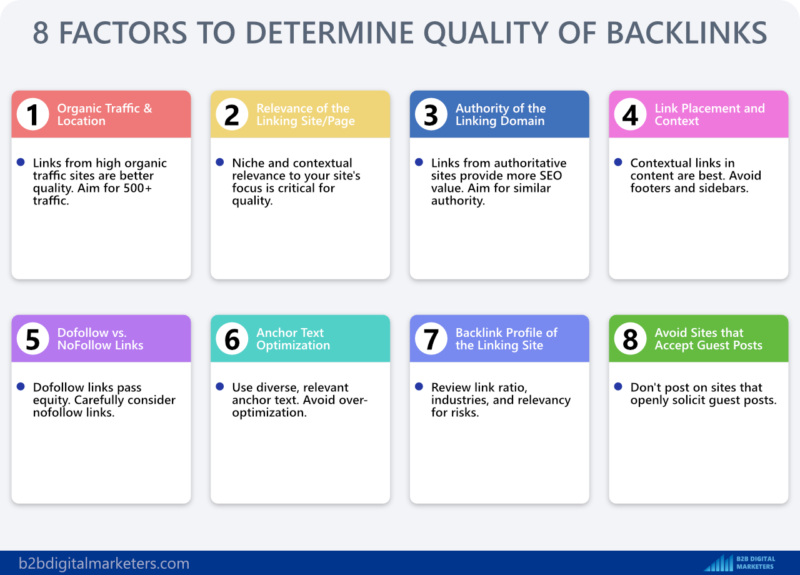
The importance of quality backlinks cannot be overstated. In fact, websites with high-authority backlinks tend to rank better and attract more organic traffic than those with a high volume of irrelevant links.
Nearly all (92.3%) of the top 100-ranking domains on Google had at least one backlink, emphasizing the undeniable impact that backlinks have on search engine visibility and traffic.
But here’s the kicker: those backlinks often come from highly trusted, niche-specific sites.
For instance, if you’re in the health and wellness industry, a link from a respected health blog or a government health site will carry far more weightage than a link from an unrelated site, such as a travel blog.
The relevance of your backlinks helps search engines understand why your content is valuable—and that’s the true power of manual link building.
The SEO Link Dilemma: Manual Effort or Automated Ease?
Newbie link builders are presented with two choices as they go forward: the manual approach and the automatic route. The former requires time, effort, and energy, and the latter – convenience efficiency, but at what price?
Let’s look at the distinction between the manual and automatic link building.
| Aspect | Manual Link Building | Automated Link Building |
| Approach | It entails visiting the profiles, introducing oneself, and requesting links from quality sites one at a time. | Uses other tools or software to obtain backlinks within a shorter time and in large quantities. |
| Quality | Involves the process of achieving relevant and authoritative backlinks from reputable sources. | These links can be from ‘anywhere,’ including irrelevant or low-quality websites, to get as many links as possible. |
| Effectiveness | More valuable and sustainable in the long run as far as SEO is concerned since this entails quality and relevant links. | May give temporary SEO advantages but can make a negative impact if the wrong sites are involved. |
| Control | Complete control over the type and source of backlinks to be directed to the site and make sure they are suitable for SEO. | Lack of control over where the links are coming from, which can be a lot of junk or otherwise low-quality sources. |
| Time Commitment | Time-intensive, as each link must be manually researched, outreached, and negotiated. | Quick and efficient, as tools can automate the process and generate backlinks in bulk. |
| Risk | Lower risk, if appropriately done, focusing on organic link-building tactics. | High risk, as this may comprise black-hat search engine optimization practices that could result in penalties. |
| Long-Term Impact | Establishes the brand gradually and consistently, which in turn helps to achieve higher ranking and visitor traffic. | Sometimes, it leads to a quick and temporary increase in rank and traffic, but if they are low quality, it has adverse effects on the website, such as loss of credibility. |
The Manual Method: Building Backlinks That Matter
It is pretty simple to lose track of automated link-building tools; however, for quite obvious reasons, manual link-building has stood the test. It is about creating bonds and getting the right links.
Now, it is time to explore steps for manual methods that will lead to the lasting success of the website.
1. Craft Content That Counts
If you want those high-quality backlinks, you must do more than churn out content. Rich in detail, helpful, and comprehensive content is way more likely to earn organic links from authoritative sites.
Create comprehensive resources, case studies, or ultimate guides answering your audience’s burning questions.
 semrush.com/blog
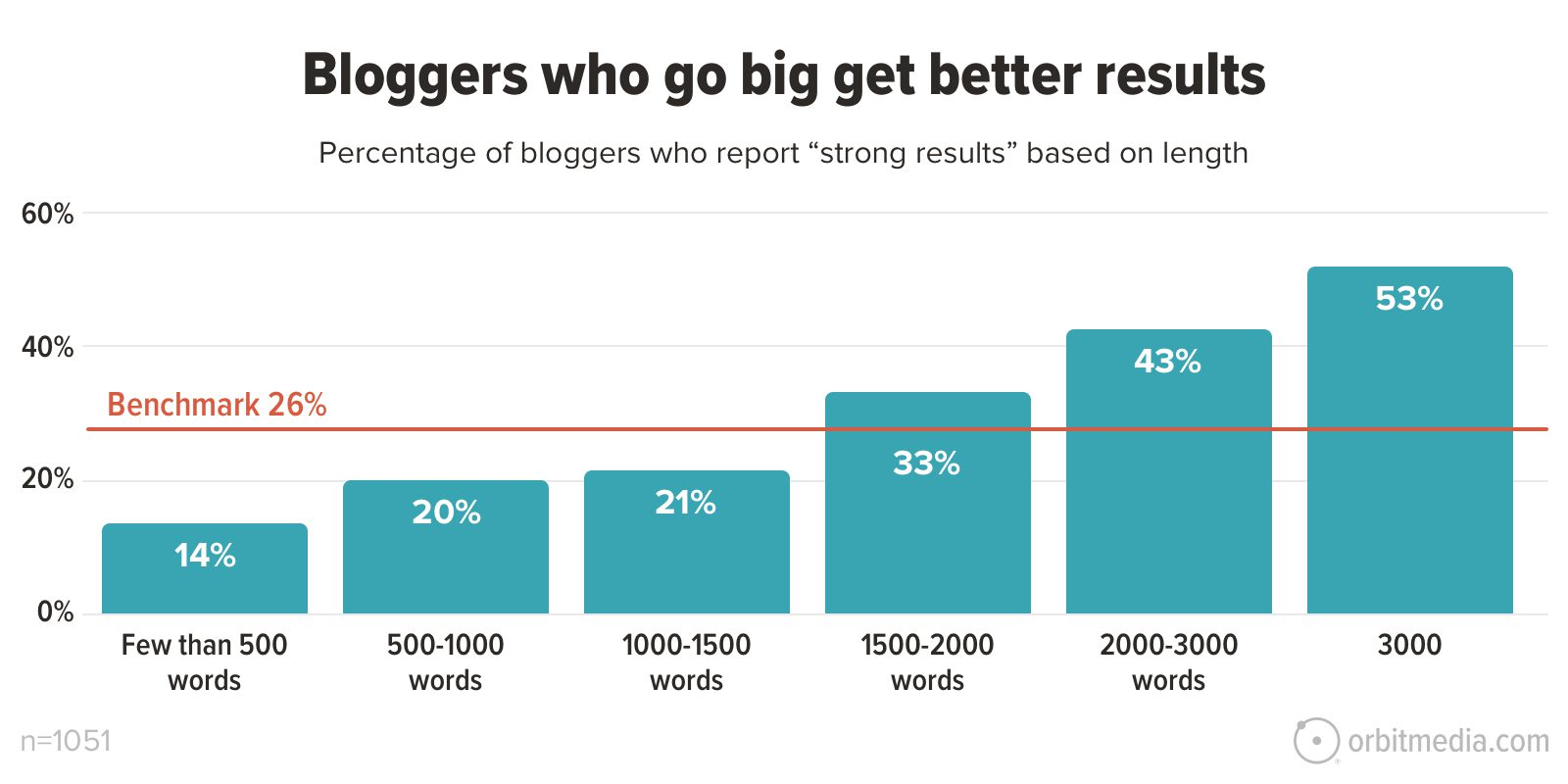
The research conducted by Orbit Media has found that the longer the blog post, the more successful your content marketing will be. More important than quantity is quality and uniqueness.
2. Guest Posting for Better Backlinks
As for the manual link-building approach, guest blogging is like getting on a trusted stage and proving your worth by getting truly valuable links.
However, do not forget that guest blogging is not a process of putting content on any blog that will accept it; rather, it identifies suitable sites relevant to your niche and more closely aligned with your audience.
Quality guest blogging – useful, research-driven, providing new insights – not only provides you with links; it creates a ripple effect when others begin quoting and linking to your articles.
For example, Neil Patel, a well-known digital marketer, employed guest blogging when it was new, trying to have his articles posted on websites with relevant domains. This was good for ranking his site higher and establishing him as an expert.
3. Connect with Key Influencers
Backlinking to other industry sites and blogs could turn your website into an authoritative source of information. Relevance is vital, as is the concept of truth because influencers will easily share content that is helpful for their followers.
Seek influencers to only genuinely relate to your brand and create content that resonates with your target audience.
The data supports this approach: regarding top-of-funnel strategies, 30% of B2B marketers report influencer marketing as the most effective, with paid search at 28% and virtual events at 23%.
This ripple effect is attained through well-thought-out outreach to the influencers themselves. Their endorsement also brings visibility through quality backlinks, laying the bedrock for long-lasting growth and organic SEO rank improvements.
4. Expand Your Reach with Targeted Sites
Creating backlinks is not as simple as sending emails; instead, they are more like creating beneficial bridges between two parties. Each outreach is an opportunity to establish partnerships with sites relevant to your target audience but not your competitors.
These are relationships that can extend your reach and theirs.
But where do you start?
You can use popular tools such as Ahrefs or SEMrush to find these gems and, in some cases, get contact details to start the discussion. But here’s a question: What makes you different from the rest of the competitors?
When contacting, it is crucial to communicate how both of you stand to gain from the connection. If you pitch a guest post, for example, focus on an area lacking in the site or information that the intended audience may find valuable.
This way, outreach is not just reaching as many people as possible but building sustainable and effective relationships.
5. Give Old Content New Life
 imeanmarketing.com/blog
Repurposing and promoting content means breathing new life into a masterpiece, making it shine again in new ways, and letting it reach new eyes. Visualize your most powerful blog post transformed into an engaging infographic, an excellent video, or an elegant SlideShare presentation.
Who said great content only gets one debut?
So, what’s the magic here?
More than half of the marketers surveyed believe visual content is significant to their marketing efforts.
Repurposing lets you speak to different segments without creating from scratch, giving your content extra mileage and appeal across various platforms. It is like taking one idea and turning it into ripples that keep creating value long after it was created.
6. Restore Link Integrity
ahrefs.com/blog
Suppose you stumble upon a bridge halfway across a broken, abandoned river that is in desperate need of repair. Now, think of fixing that bridge and planting a flag of your own right there.
That’s the gist of the “broken link-building method.”
So, how does it work?
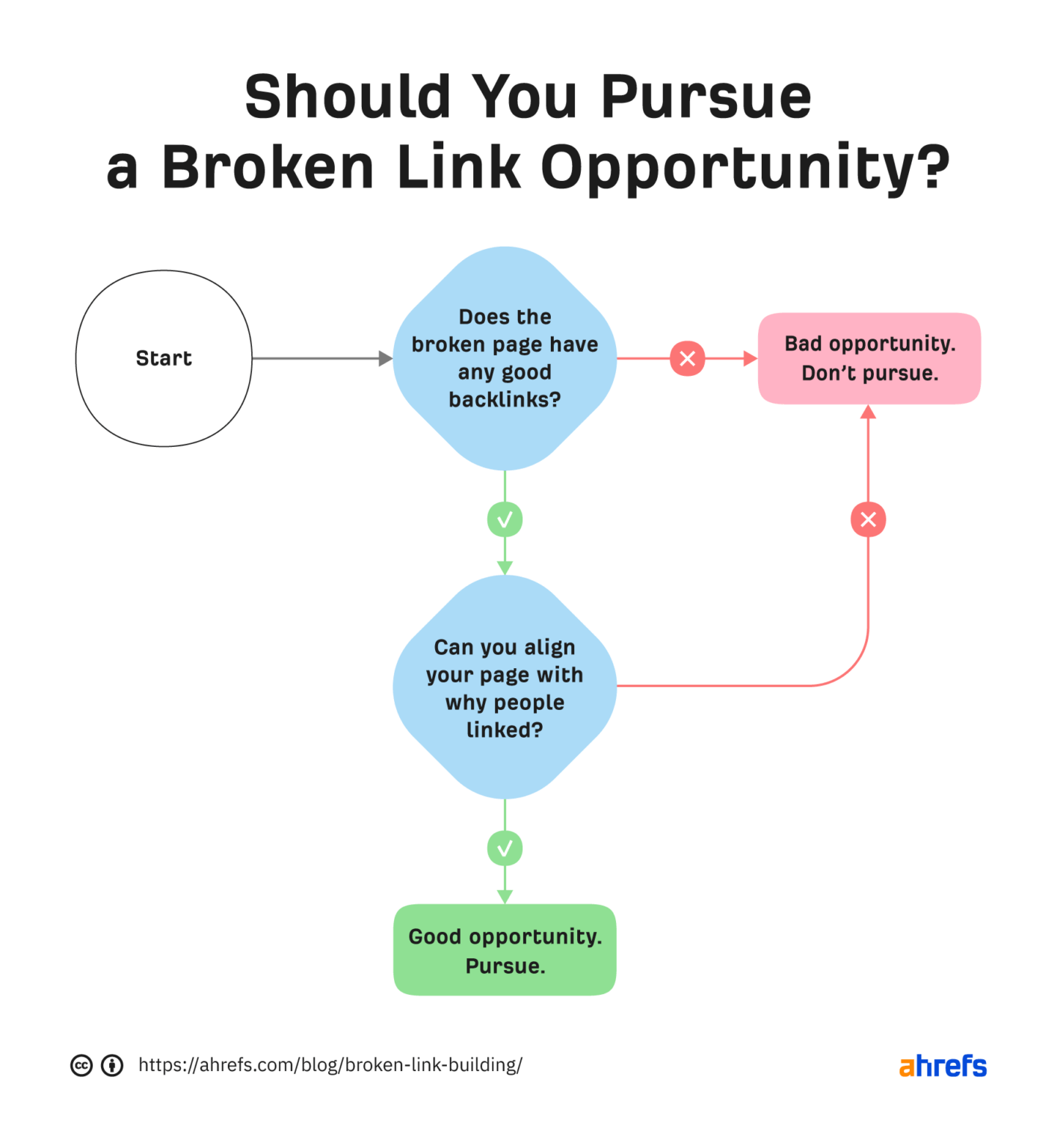
Simple: every time you help an owner fix a dead-end link on their site, you can suggest your relevant content as a substitute. It’s a win-win- you’re solving their problem while securing a new backlink for yourself.
Who could say no to that?
Just think of how many opportunities are out there waiting to pop!
Here’s something intriguing: According to Ahrefs, about 66.5% of all websites have at least one broken link. Just think of how many opportunities are out there waiting to be discovered.
The process is straightforward. Use tools like Ahrefs or Screaming Frog to find broken links on other websites in your niche.
Once you find them, write a helpful email to the webmaster pointing out the broken link and offering your content as a quality replacement. It’s a small gesture that can sometimes make quite an impression.
And the reward is not limited to a link alone. Every contact you have is an opportunity to earn people’s trust in the line of work, thus giving your brand the much-needed credibility and authenticity.
Building High-Quality Links with a Strategic Approach
Manual link building in SEO somewhat resembles planting the seeds for a great digital garden: it requires patience, precision, and actual investment in relationships.
But what does it take for this process to be truly effective?
It’s the combination of high-quality, relevant backlinks for something more than just boosting rankings; instead, it’s gaining trust and credibility. Every backlink built is a vote of confidence from another authoritative site.
How do you get that trust?
With time and proper methodology, the website would go up the search rankings and be an industry leader. Yes, it is long and slow, but the reward is well worth it.

About the author: Vibhav Gaur, Business Head
Vibhav Gaur leads strategic operations and business growth at the organization. With a strong background in digital transformation and customer-focused solutions, he has helped numerous clients streamline their web presence and scale efficiently. His leadership ensures seamless execution across teams, with a commitment to delivering results and fostering innovation in every project.


