

Crafting stellar content is only the opening act; the spotlight shines on those who know how to make their work visible.
Did you know that 96.55% of web pages remain hidden in Google’s archives and get only zero organic traffic?
Backlinks are the secret ingredient and the digital nod of approval that whispers to search engines: ‘This is worth ranking.’
But beware: shortcuts like automated tools or buying paid links can ruin your efforts and leave your site entangled with penalties.
Getting a backlink manually ensures that your backlink brings you high-quality links that help your website become visible and authoritative. Manual link building is a sustained investment in the success of your website.
So, it’s time to find some actionable strategies to uplift your backlink profile and be noticed online.
Why Manual Backlink Strategies Win Every Time
Manual backlink building involves actively finding avenues to generate high-quality backlinks through personalized outreach, strategic partnerships, and valuable content.
Notably, manual methods differ from automated ones because automated methods often rely on spammy tricks, whereas Manual backlink building strategies encompass organic connections that resonate with users and the website’s niche.
Backlinks play a critical role in building domain authority. Websites that rank on the first page of Google usually have 3.8 times more backlinks than those shown on the second page.
Why Manual Backlinks Building is a Smarter Choice?
What sets Manual backlink building apart is its focus on these core elements:
Quality Over Quantity
Automated tools tend to create links from low-quality or irrelevant websites and have the potential to severely harm SEO. Manual backlink building ensures that the backlink comes from reputable sources, thereby giving them a boost in search engines.
 adamconnell.me
Link quality vs quantity is often debated among marketers. Some prefer volume, but 56.33% agree that the best way to improve rankings requires a balanced approach — combining quality and quantity.
Relevance Drives Results
 b2bdigitalmarketers.com
Relevancy is key to building a backlink profile that increases domain authority. Manual backlink building allows you to target sites with content similar to your industry.
Reduced Risk of Penalties
Paid backlinks are shortcuts to Google and can trigger algorithmic penalties that lead to lower rankings or even deindexing. In contrast, Manual backlink building follow Google’s E-E-A-T (Experience, Expertise, Authoritativeness, Trustworthiness) criteria by focusing on having high-quality, user-centric content.
Let’s refer to an example of how Google penalized Overstock.com in 2011 for using paid links.
The rise and fall of Overstock.com search rankings is a cautionary tale of what not to do when it comes to cutting SEO corners. In 2011, Overstock climbed above Google’s organic rankings for high-competition terms like ‘bunk beds’ and ‘vacuum cleaners.’
However, their success came at the cost of a controversial strategy that enticed them to take over .edu websites, where they offered college students and faculty discounts in exchange for linking Overstock product pages to their site.
Competitors immediately flagged this tactic, and eventually, the Wall Street Journal ran an exposé.
Within days, Google penalized Overstock, and their rankings fell from the top of the page to pages five and six. This served as a warning that although paid or manipulative link schemes might deliver quick results in the short term, they can also hurt in the long run.
Google’s Take on Backlink Quality
 moz.com
Quality always outweighs quantity in Google’s algorithms. E-E-A-T principles reinforce that your links should come from sources that are authoritative and trustworthy.
A recent update pointed out that all backlinks from high-quality sources will have a direct impact on the relevance and the ranking of the page.
Setting the Stage: What to Do Before Diving into Backlink Building
While Manual backlink building is a powerful strategy, it’s important not to dive in unprepared, or you run the risk of wasting time and missing opportunities. The following is how you should set up backlink building.
1. Audit Your Website Content
 blog.hubspot.com
Before you reach out to people for backlinks, check out your website.
Is your content link-worthy?
The best Manual backlink building strategies revolve around high-quality, compelling content that people want to share naturally. A study found that long-form content (3,000+) produces 77% more backlinks than short pieces.
Generate assets like data-driven reports, expert guides or even exclusive insights for your audience. The high-value content you publish on your site not only helps you get links but also makes you look authoritative in the eyes of readers and Google.
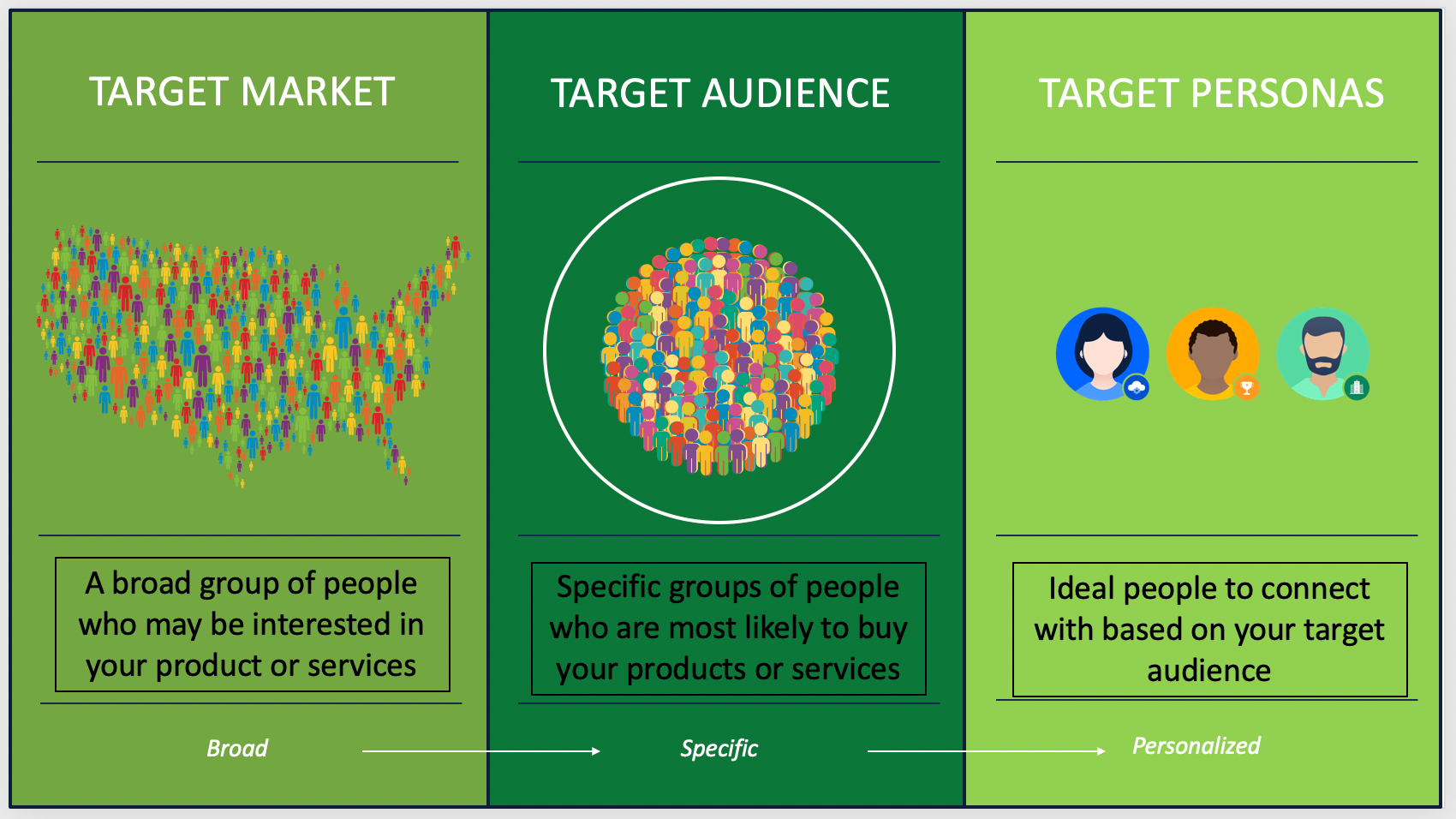
2. Identify Your Target Audience
 searchenginejournal.com
Not all backlinks are created equal. You must have links from authoritative sites in your niche in order to maximize impact.
First, define your target audiences and the industries they frequent. Suppose you are in the fitness niche; look for health blogs, wellness influencers, or online fitness communities.
With tools like Ahrefs or SEMrush, you can analyze where your competitors are getting their links from and identify unexplored opportunities.
3. Set Clear Goals

semrush.com
What’s your end game?
By setting specific and measurable goals, you will direct your Manual backlink building strategy and be able to see the progress. If the goal is to get more organic traffic, acquiring links to cornerstone content that has been optimized to target top search volume keywords is what you should focus on.
5 Hands-On Manual Link-building Techniques That Deliver Results
The task of Manual backlink building isn’t an art; it’s a craft. It’s about rolling your sleeves, getting into the trenches, and making real relationships that stand the test of time and Google’s algorithm changes.
Let’s explore five proven techniques that convert Manual backlink building into measurable results.
1. Guest Blogging
So, when it comes to manual link-building techniques, guest blogging is the undisputed champion.
Why?
Because it’s a win-win: The host site gets valuable content while you secure a quality backlink. And as with any classic move, it all depends on execution.
Having said that, let’s look into the art of perfecting this time-tested strategy.
Step 1: Research Your Target Websites
The first rule of guest blogging is to know who your audience is. Go hunting for the websites in your niche whose voice and values incorporate your brand.
Perhaps if you’re in the tech space, think of blogs like TechCrunch, ReadWrite, etc.
Want real-time proof?
A survey found that 60% of bloggers guest post to pull in traffic, leads, and backlinks.
Step 2: Pitch Like a Pro
Here’s where most people stumble: the pitch.
Editors get dozens of generic requests daily, so make sure your pitch stands out.
Send a personalized email proving that you’ve done your homework. Pull amazing references from a recent article they have published, give some insight into why your topic aligns with their audience and put forth a brilliant idea for them to run with.
Step 3: Create Value-Driven Content
When your pitch is accepted, the real work begins. Your content has to dazzle. Don’t forget that you’re not merely writing for a link, but you’re also making yourself visible to a new audience. Content should have actionable insights, compelling stats, and a conversational tone.
Tips for Guest Blogging Success
- Customize Your Pitch: If you often use a template, editors will spot it from a mile away.
- Focus on Quality: A good post will compel people to read further and click on your site.
- Build Relationships: Guest posts can earn you long-term collaborations.
2. Leveraging Resource Pages
Resource pages are a hidden treasure trove of the internet: a carefully compiled collection of links and content that site owners post to provide value to their audience.
 backlinko.com
Resource pages for link building are the second most used strategy by SEO professionals, according to Search Engine Land.
Steps to Tap into Resource Page Potential
- Unearth the Gems: Go ahead and look for resource pages in your industry. Using search operators like “your niche” + inurl:resources or “your niche” + intitle:resources will bring up pages similar to your content.
- Make Your Pitch Shine: Once you know which pages are relevant, it’s time to contact them. Don’t just shoot off a generic email here; personalize. The best stands out because they let website owners know how your content solves a problem or helps enhance their resource list.
Here’s an example outreach email template:
Subject: A Helpful Addition to Your Resource Page
Hi [Name],
I recently came across your [Resource Page Name] and loved the curated tools and tips you’ve shared—it’s a goldmine for [target audience].
I noticed that your page focuses on [specific topic], and I thought my guide on [Your Content Title] could make a valuable addition. It’s packed with [specific value, e.g., actionable tips or unique insights].
Here’s the link: [Your URL]. I’d love to hear your thoughts!
- Follow-Up, But Don’t Overdo It: If you don’t get a response, a polite follow-up can go a long way. Research shows that persistence works, and one follow-up email increases reply rates by an astounding 22 percent.
3. Broken Link Building
 semrush.com
A broken link is simply a link on a page that no longer points to a valid destination. They are SEO kryptonite, annoying your users while indicating damage to your site.
But as the saying goes, one person’s trash is another’s treasure. Broken link building becomes an opportunity to build backlinks to your content.
Why It Works
Website owners love help, especially when that help makes the site better. You’re offering a solution by spotting broken links and providing a relevant, high-quality replacement instead of asking for a favor.
Steps to Execute This Strategy
- Hunt Down Broken Links:
 neilpatel.com
Start with detecting broken links on authoritative sites in your niche. Tools such as Ahrefs’ broken link checker come in handy.
- Create Your Content (or Leverage Existing Pieces): Once you’ve found a broken link, ask yourself: Does my content offer a suitable replacement? If not, create a resource for that gap. Make it detailed, attractive to the eye, and offer something unique in terms of the topic.
- Reach Out Like a Pro: Draft an email that is polite, value-driven, highlights the broken link, and suggests your content as a solution.
For instance:
Hi [Name],
I was exploring your fantastic article on [Topic] and noticed a broken link pointing to [specific resource]. As it happens, I’ve created a [content type, e.g., guide or article] that covers the same topic in depth. Here’s the link: [URL]. I’d be thrilled if it could help replace the broken one!
- Rinse and Repeat: There are plenty of broken links out there that you can harness to build multiple backlinks.
4. Collaborating on Content (Interviews, Expert Roundups)

techtarget.com
Content collaborations are a two-way road. You earn backlinks from their featured guests as they share the content with their audience for you. For them, it’s an opportunity to show their expertise to a broader audience.
The data also points out that 82% of marketers who pursue influencers have better results, whether in terms of traffic or social shares.
How to Master Collaborative Content
- Scout Your Stars: Start by identifying thought leaders, influencers or niche experts your audience looks up to. As an example, if you work within the sustainability niche, contact eco-entrepreneurs or green technology pioneers, and you may have hit on a winning roundup.
- Make the Ask Irresistible: When reaching out, think in terms of win-win. Show why collaboration is beneficial to them: for example, by giving them exposure to your audience or being featured on a highly valuable piece of content.
For instance:
Hi [Name],
I’m putting together a roundup of expert wisdom on marketing trends for 2024 and would love to include your perspective! It’ll be a valuable resource for our combined audiences with your expertise.
Would you be interested in talking about [specific topic or question]?
- Showcase the Spotlight: When your content goes live, promote it as if it is your magnum opus. Share with your audience, encourage the contributors to share with theirs, tag the contributors on social media and include them in your email blasts.
- Build Relationships Beyond the Content: Collaborations should be treated as the starting point for long-term partnerships. Nurturing these connections leads to more and more backlinks, opportunities, and further growth.
5. Skyscraper Technique
 ahrefs.com
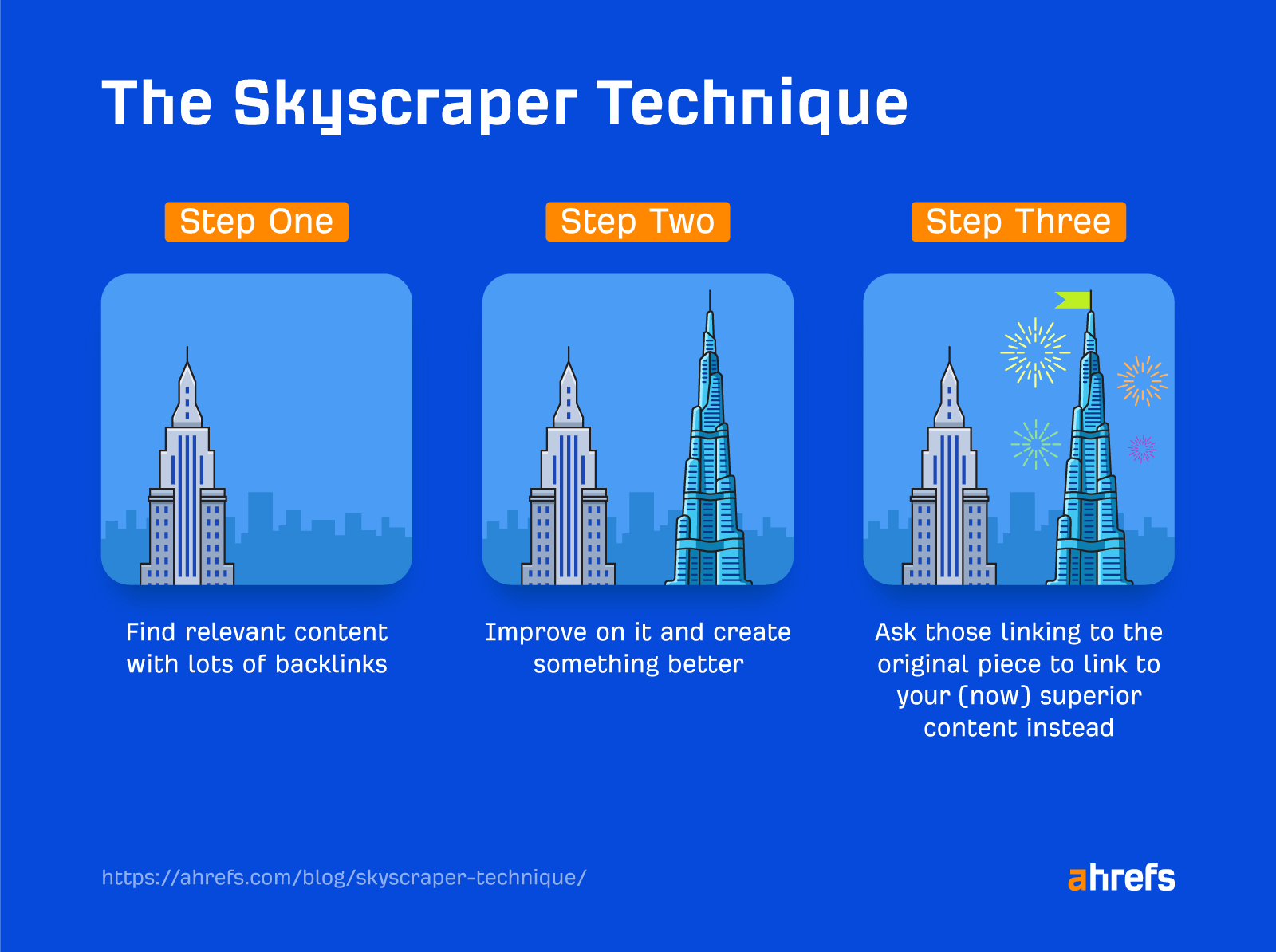
The Skyscraper Technique is a glorious display of one-upmanship done in style. It’s about finding top content in your niche, crafting something a million times better, and leveraging its greatness to draw backlinks like a magnet.
It is like building a digital skyscraper that outshines the neighboring buildings. It’s a sight that leaves people no choice but to look up and link up.
 backlinko.com
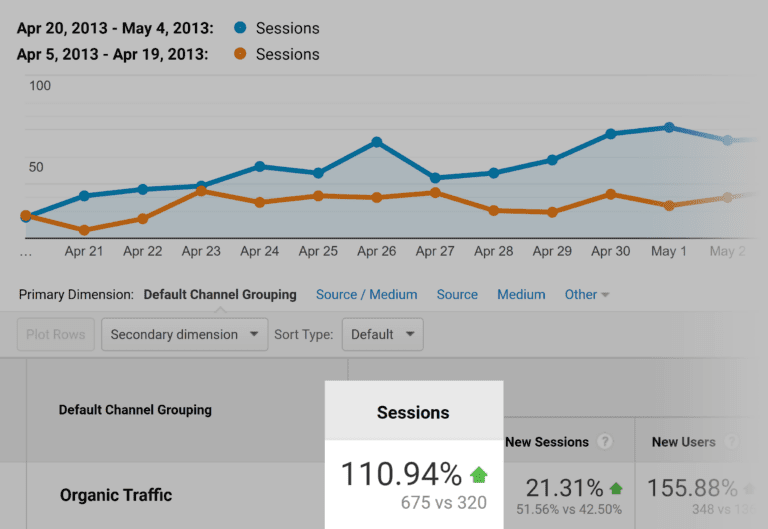
Brian Dean, the pioneer of this strategy, used the strategy to increase organic traffic by 110 percent in two weeks. The trick is to not reinvent the wheel but turn it into a turbocharged racecar.
Steps to Build Your Skyscraper

blog.hubspot.com
- Spot the Foundation: The first step is to find prevalent content in your industry. Use Ahrefs or Google Trends to find the most linked articles. For instance, in the fitness niche, a post titled ’10 Best Exercises for Weight Loss’ might attract tens of thousands of shares and backlinks.
- Elevate It Higher: This is where the transformation begins. Level up that existing content. Is there a way you can make it more detailed with fresh data or multimedia, such as infographics and videos? The aim is to sharpen your copy so that it leaves competitors in dust.
- Promote Like a Pro: Even the tallest skyscraper needs visibility. Contact sites that link to your original content, highlighting your superior version.
An ideal sample outreach pitch could be:
Hi [Name],
I noticed you linked to [Original Post] in your article [Link]. Recently, I created an updated version that includes [these improvements]. I think your readers would find it incredibly valuable. Here’s the link: [URL]. Let me know what you think!
- Amplify Your Reach: Share your content across social media, email newsletters, and online communities. Continue to collaborate with influencers to further boost its visibility.
Master Manual Backlinking for Sustainable SEO Wins
One of the most sustainable and rewarding SEO strategies is Manual backlink building, which can bring you higher search rankings, better visibility, and steady traffic in a targeted way.
While it does take time, work, and a little bit of creativity, the long-term rewards are well worth it. From guest blogging to optimizing resource pages, each strategy leads to building a robust online presence.
Begin small—pick one technique from this guide and start experimenting with it today. Persistence and focus will make a difference and give your website a firm base for growth and authority in the future.

About the author: Vibhav Gaur, Business Head
Vibhav Gaur leads strategic operations and business growth at the organization. With a strong background in digital transformation and customer-focused solutions, he has helped numerous clients streamline their web presence and scale efficiently. His leadership ensures seamless execution across teams, with a commitment to delivering results and fostering innovation in every project.


